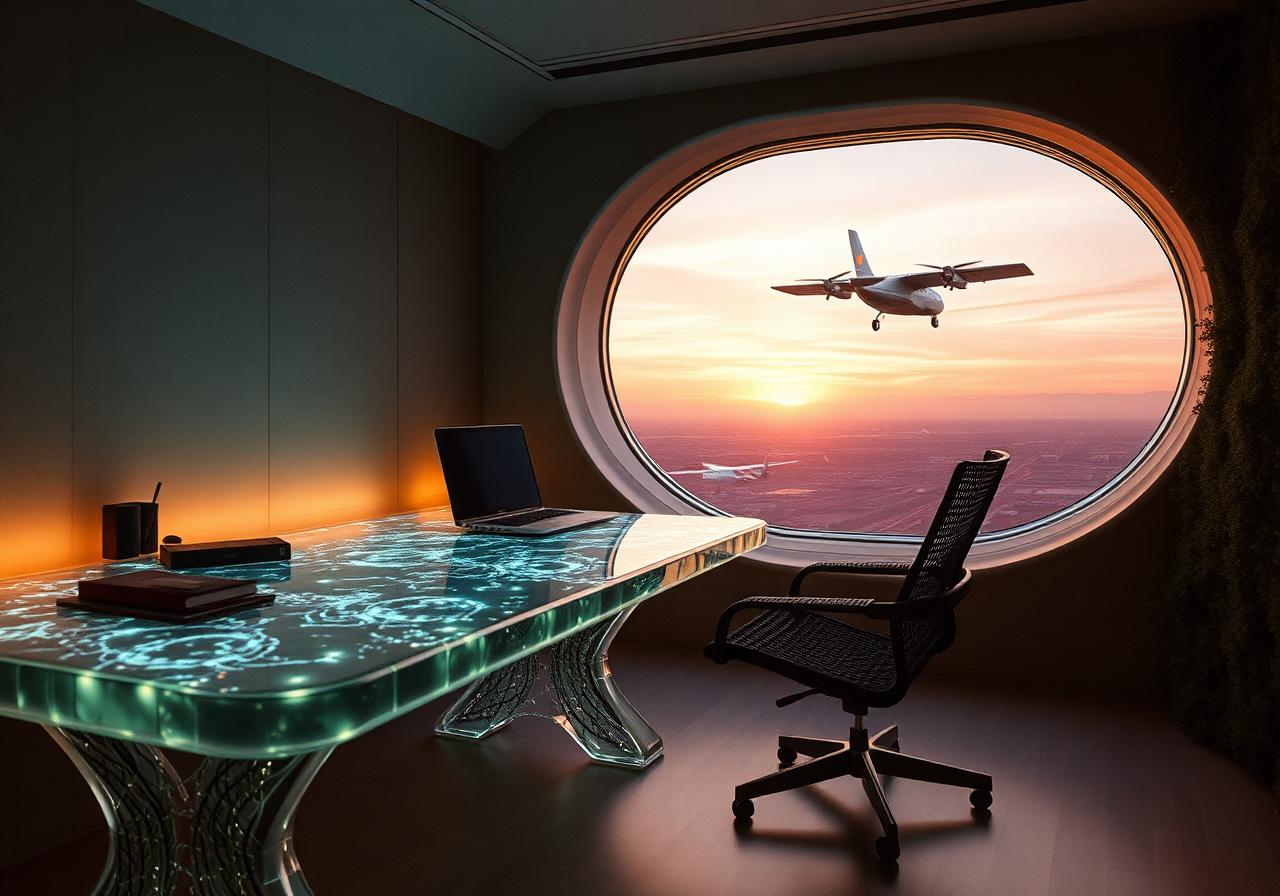
2030s – Beyond
Grown, Glowing, Quietly Sentient
If the twentieth century furnished the executive office in mahogany and the early twenty-first in mesh, the next chapter is being drafted in mycelium, OLED, and ambient intelligence. The desk is no longer a place you go — it's a system that meets you halfway.
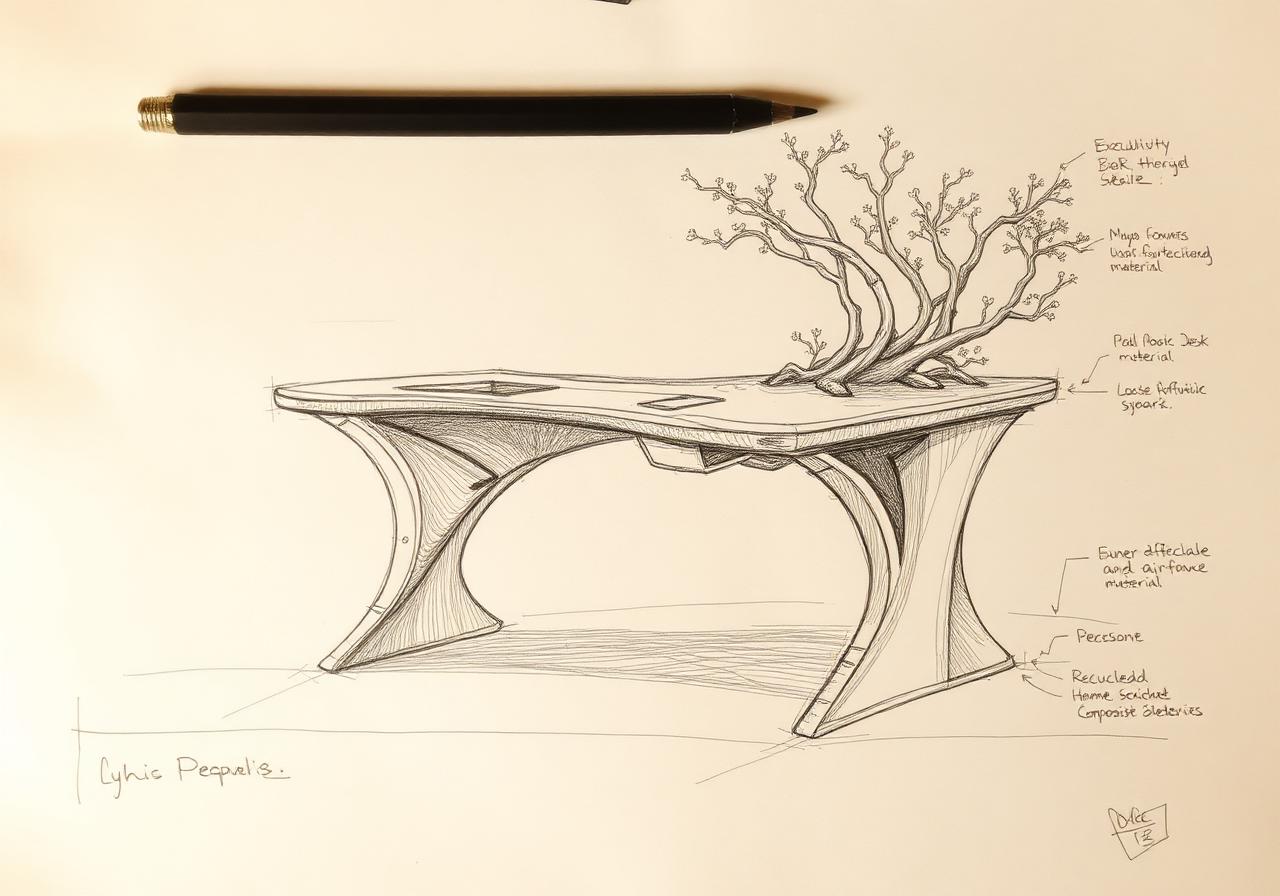
Furniture that grows itself
Mycelium composites, bacterial cellulose, and lab-grown leather are already in production at MoMA-collected studios. Within a decade, expect aviation HQs to commission desks that were literally cultivated — pressed into shape over a few weeks, carbon-negative by the time they ship, and biodegradable at end of life. Recycled airframe composites will be the structural skeleton; living material the skin.
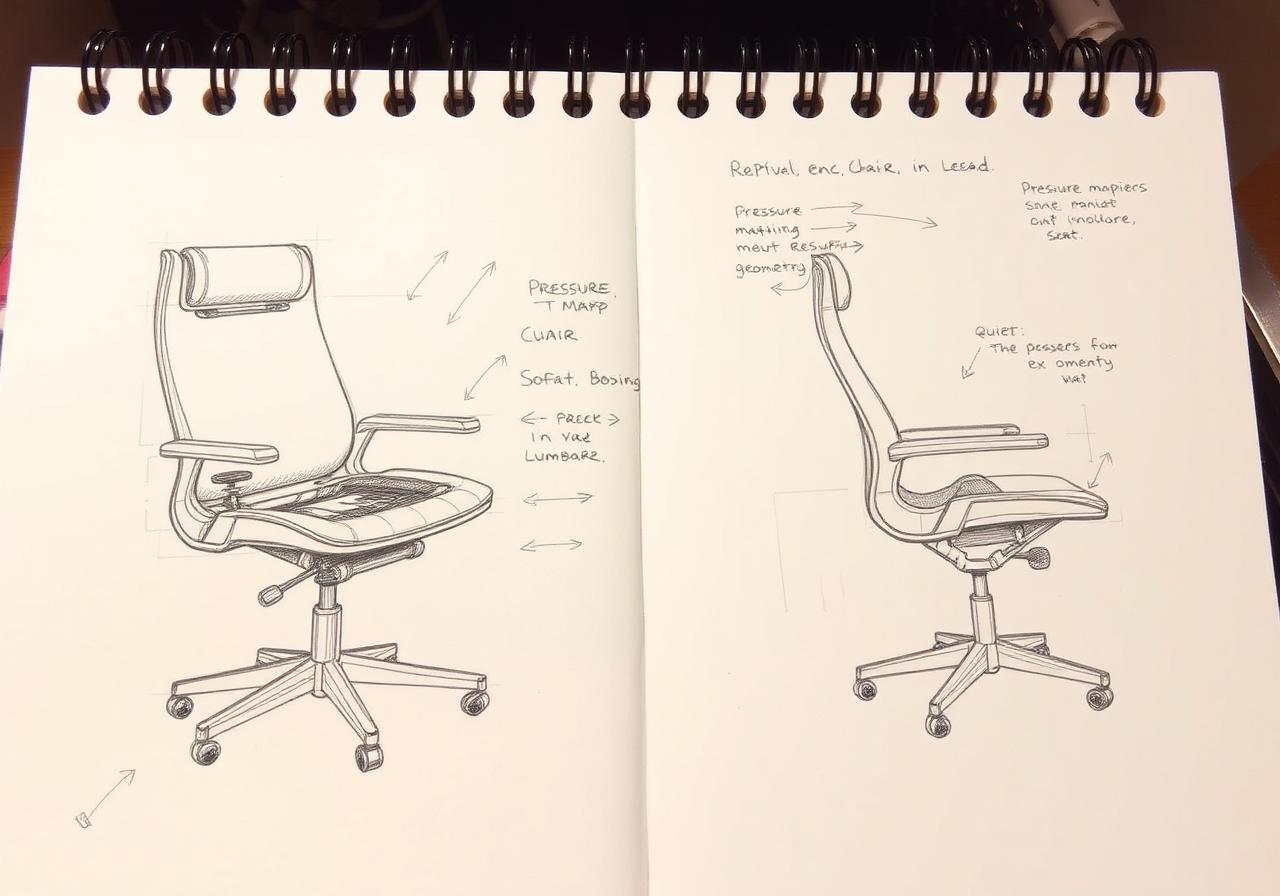
Adaptive seating, post-Aeron
The Aeron held the executive floor for thirty years on a single insight: don't sand the body to fit the chair. The next chair will go further — soft robotics in the lumbar, pressure mapping in the seat, and quiet motors that re-shape geometry through a long meeting. Posture won't be corrected; it will be conducted.
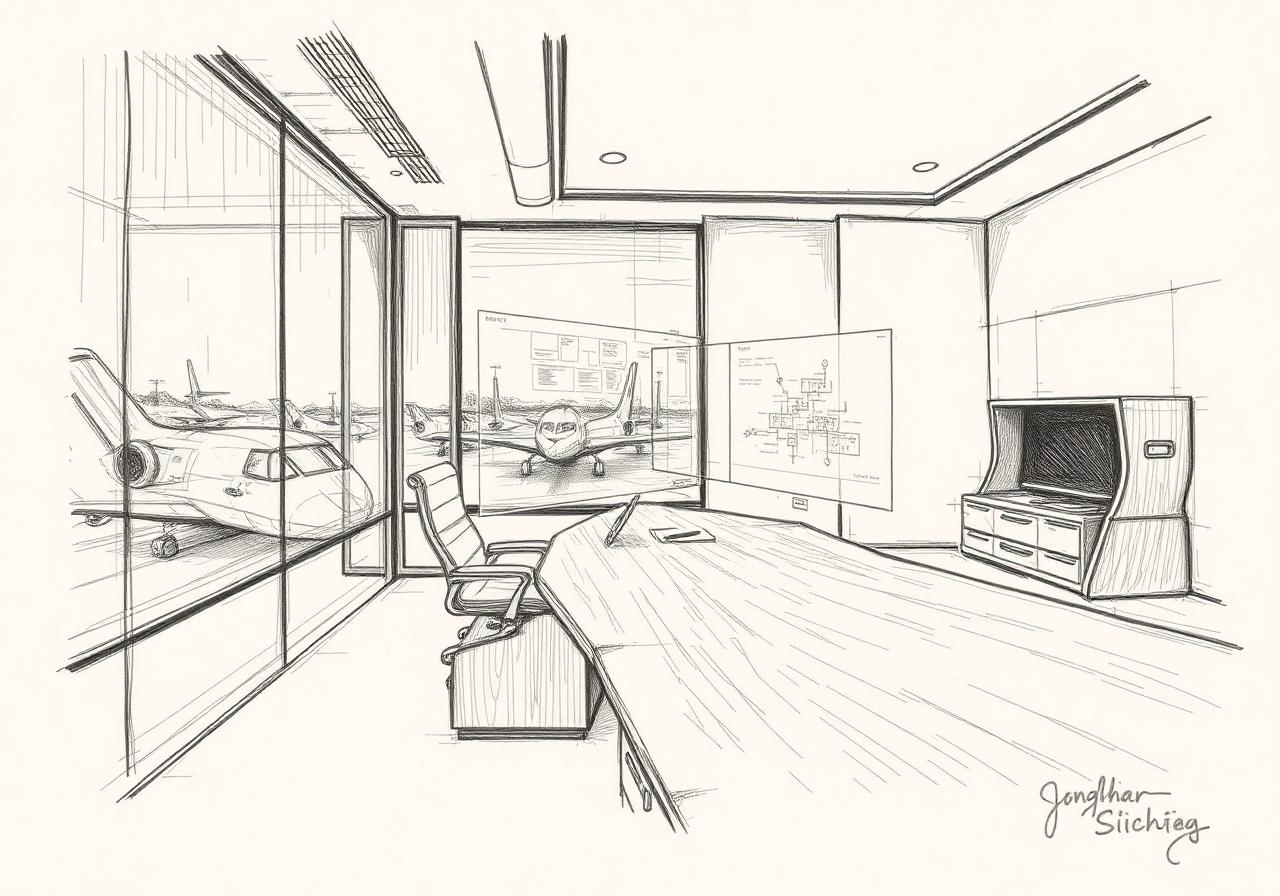
The screen disappears
Window-walls of transparent OLED will let an executive replace a runway view with a generative one — a live, rendered approach into Singapore's vertiport during a Zurich winter. Desks will surface holographic schematics on demand and dim back to wood-grain when the meeting ends. The screen as object will go the way of the ashtray.
An ambient co-pilot
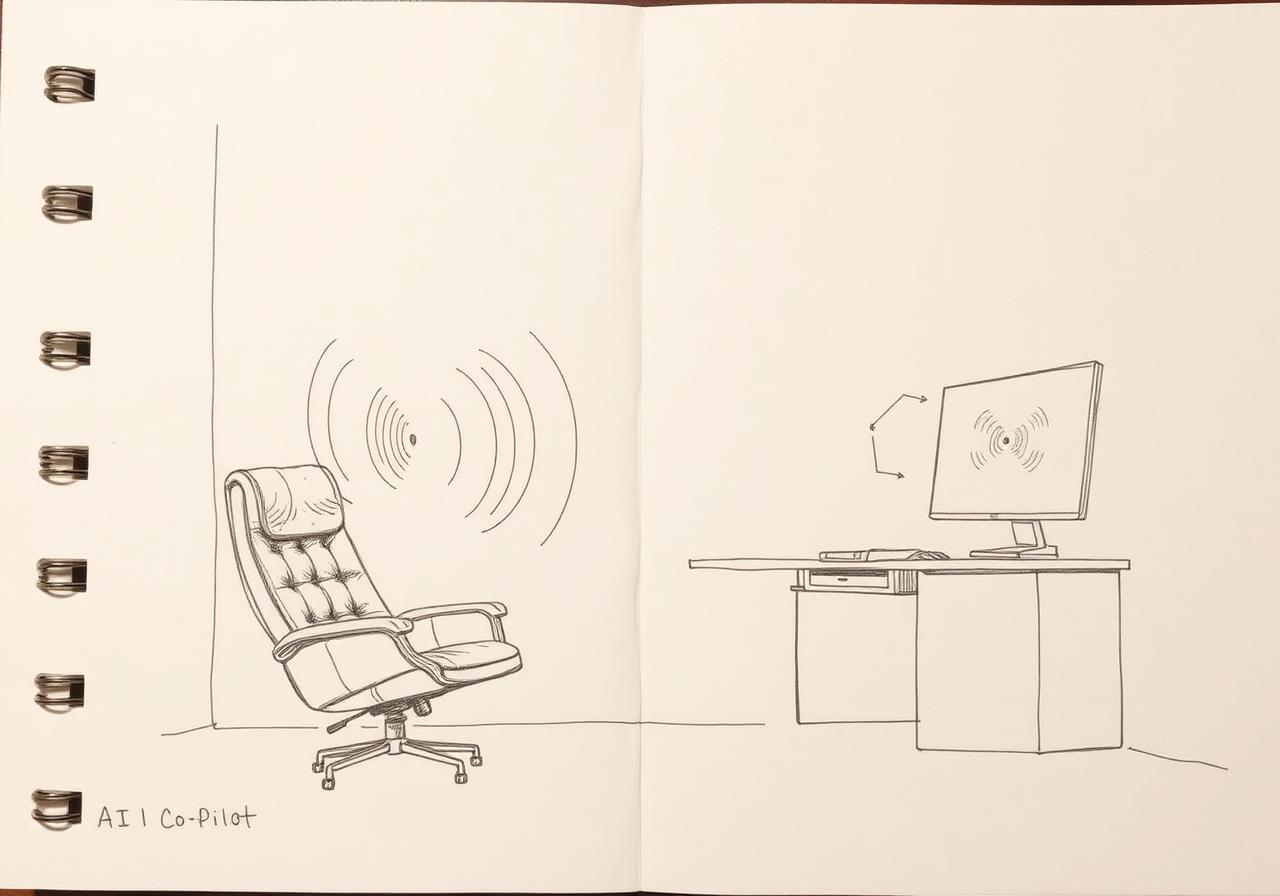
The most consequential change isn't material — it's that the room itself will brief its occupant. Ambient AI will summarize overnight ops before the chair is even warmed, surface the relevant safety bulletin when a name is mentioned, and quietly draft the follow-up email by the time the executive stands up. The office becomes less a stage for power and more a co-pilot for it.
Where this could go wrong
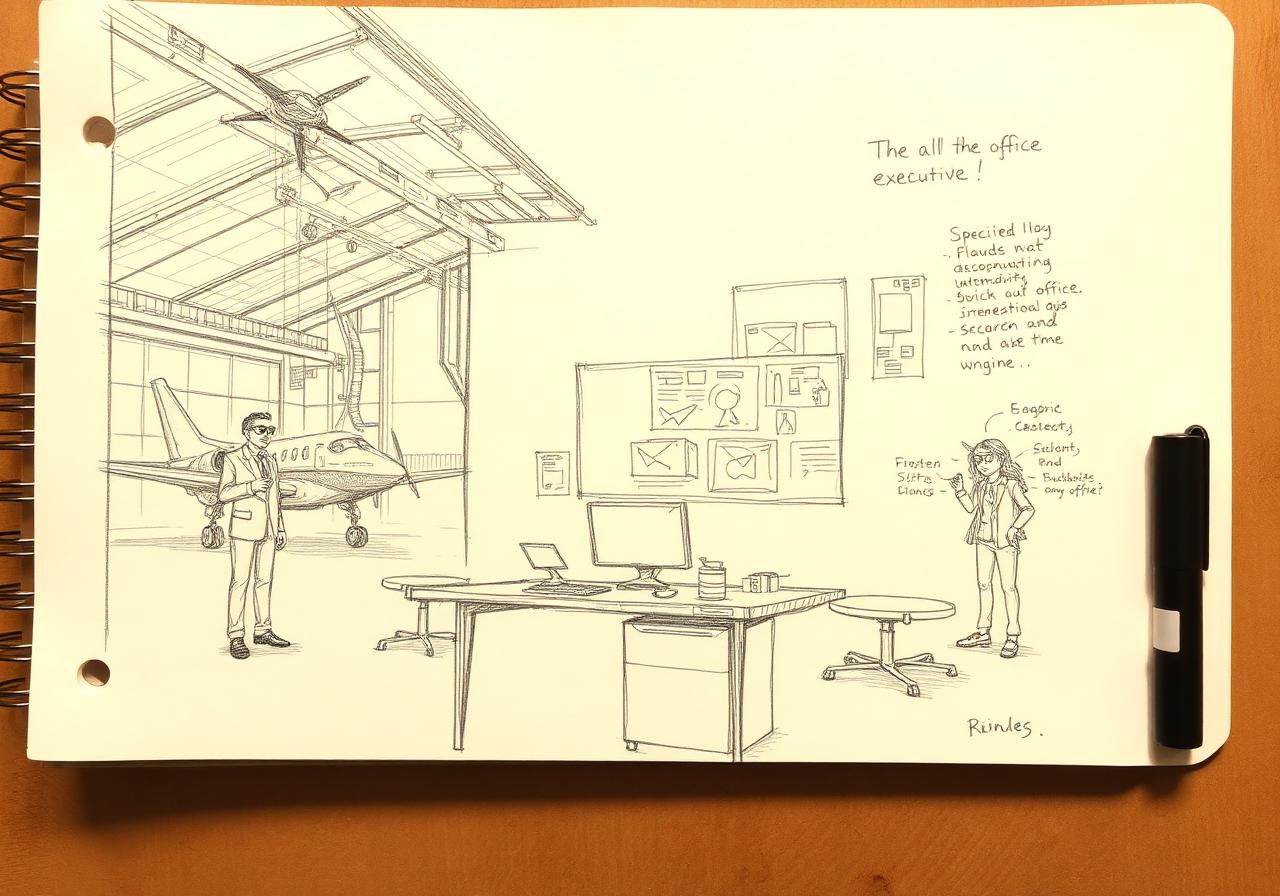
There's a counter-future where the executive office collapses entirely — replaced by a personal AR layer the executive carries between hangars, lounges, and homes. In that scenario, the great tradition of executive furniture ends not because we stopped designing it, but because we stopped needing a fixed room to put it in. The mahogany partner desk would, finally, have outlived its descendant.