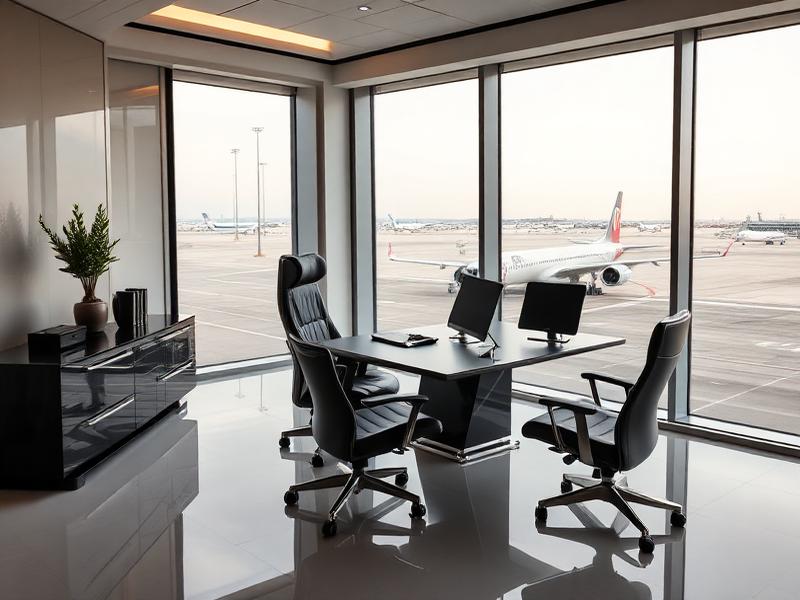
1990s – Present
Ergonomics, Carbon Fiber & The Digital Cockpit
Today's aviation executive works from a height-adjustable surface, surrounded by mesh, glass, and recycled aluminum. The office is no longer a stage — it is an instrument, tuned for focus, health, and constant connection.
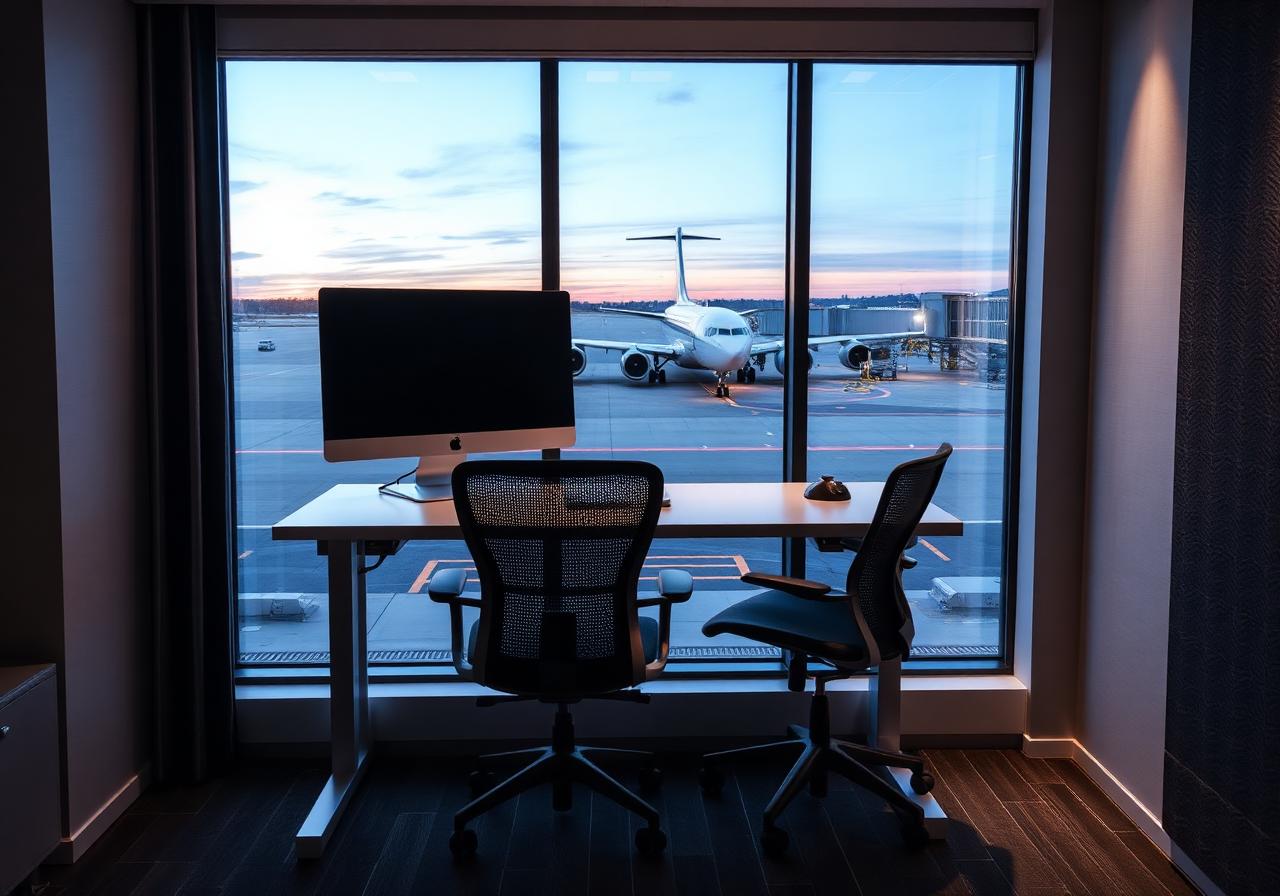
From Aeron to Adjustable
Herman Miller's Aeron chair, introduced in 1994, replaced leather thrones across executive floors at Boeing, Airbus, and Emirates. Sit-stand desks followed in the 2010s — a quiet acknowledgment that the men and women shaping aviation now spent more hours at a screen than in a cockpit.
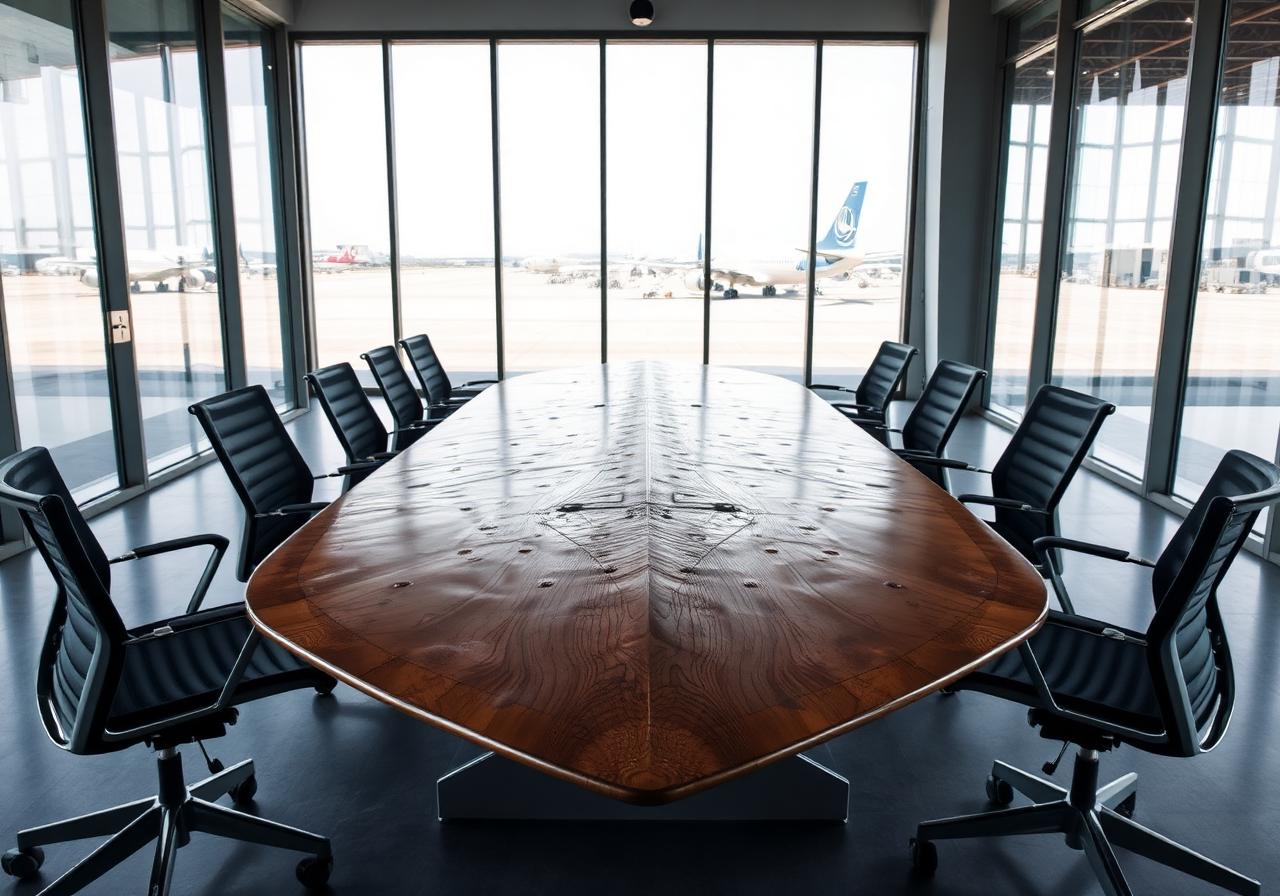
Materials Borrowed from the Aircraft
Carbon fiber tabletops, bent aluminum frames, and even decommissioned 747 fuselage panels reborn as conference tables — modern aviation furniture often quotes the very machines it serves. The aesthetic is precise, light, and engineered.
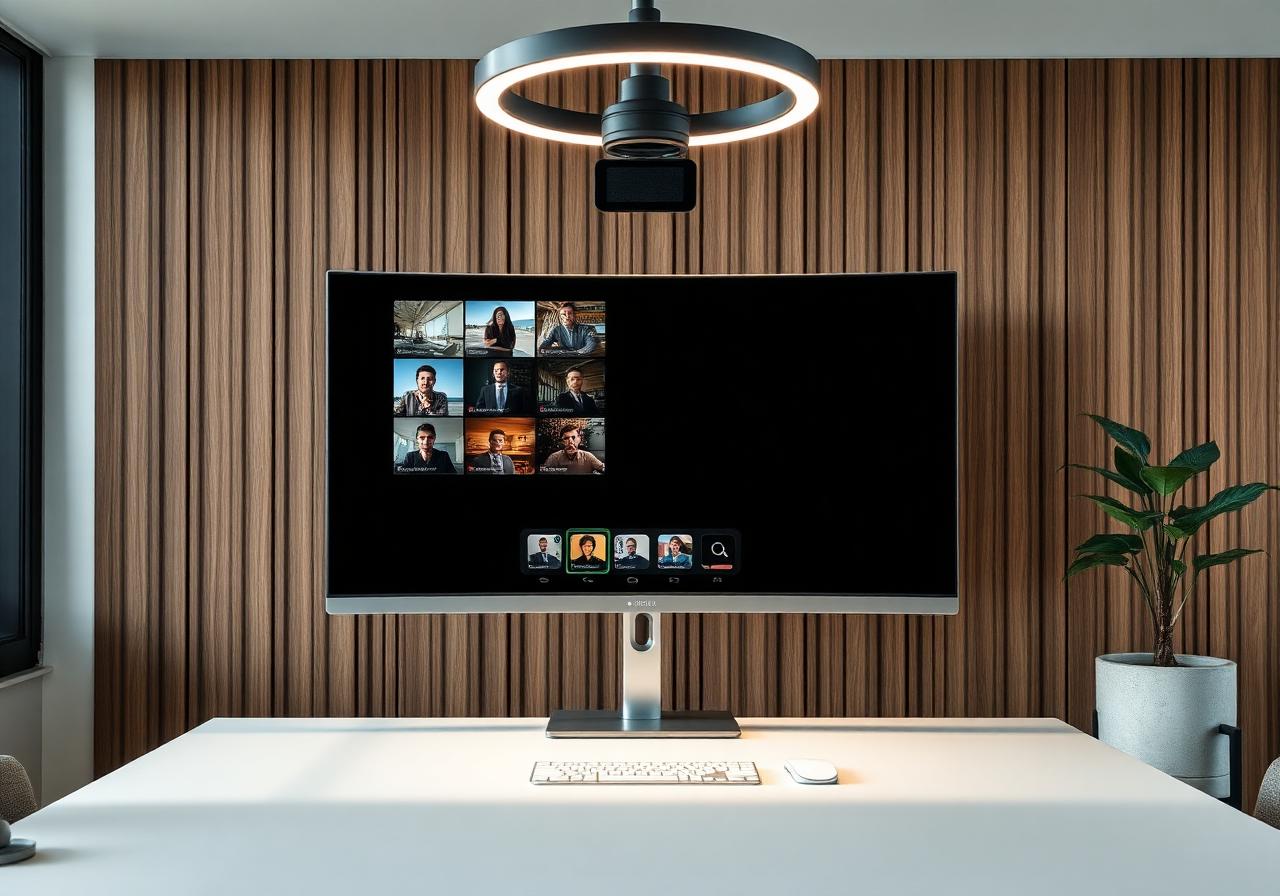
The Office as Network
Today's executive suite is built around video. Acoustic panels, ring lights, and integrated cameras occupy the spots once held by ashtrays and globe bars. Power is no longer projected through mass — it is projected through bandwidth.
Sustainability quietly enters the spec
ESG disclosures pushed FSC-certified wood, low-VOC finishes, and end-of-life takeback contracts into airline procurement specs by the late 2010s. Lufthansa Group, KLM, and IAG now publish furniture-level carbon data alongside fleet emissions. The mahogany throne has been quietly retired not just by ergonomics, but by the same sustainability arithmetic that's reshaping the fleet itself.
Pieces from this era
Aeron Chair
The mesh-suspension chair that retired the leather throne and made ergonomics a C-suite virtue.
Carbon Fiber Conference Table
Tabletops woven from the same prepreg carbon laminate used in the 787 and A350 — light, rigid, and unmistakably aerospace.
Recycled Aircraft Aluminum
Decommissioned 747 fuselage panels, engine cowlings, and wing skins reborn as desks, tables, and shelving.