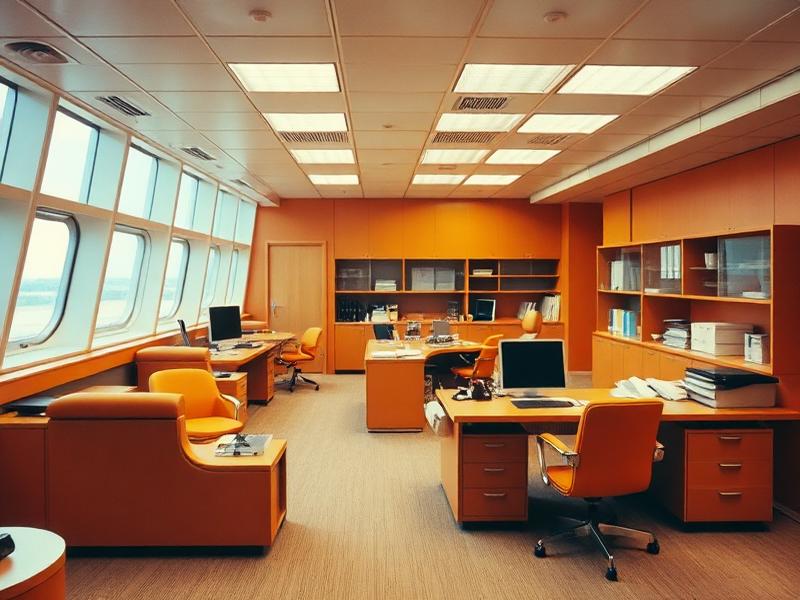
1960s – 1970s
Jet Age Modernism Takes Flight
The arrival of the 707 and the moon landing reshaped how power looked. Out went the mahogany; in came fiberglass, chrome, and modular systems that promised efficiency, optimism, and the future itself.
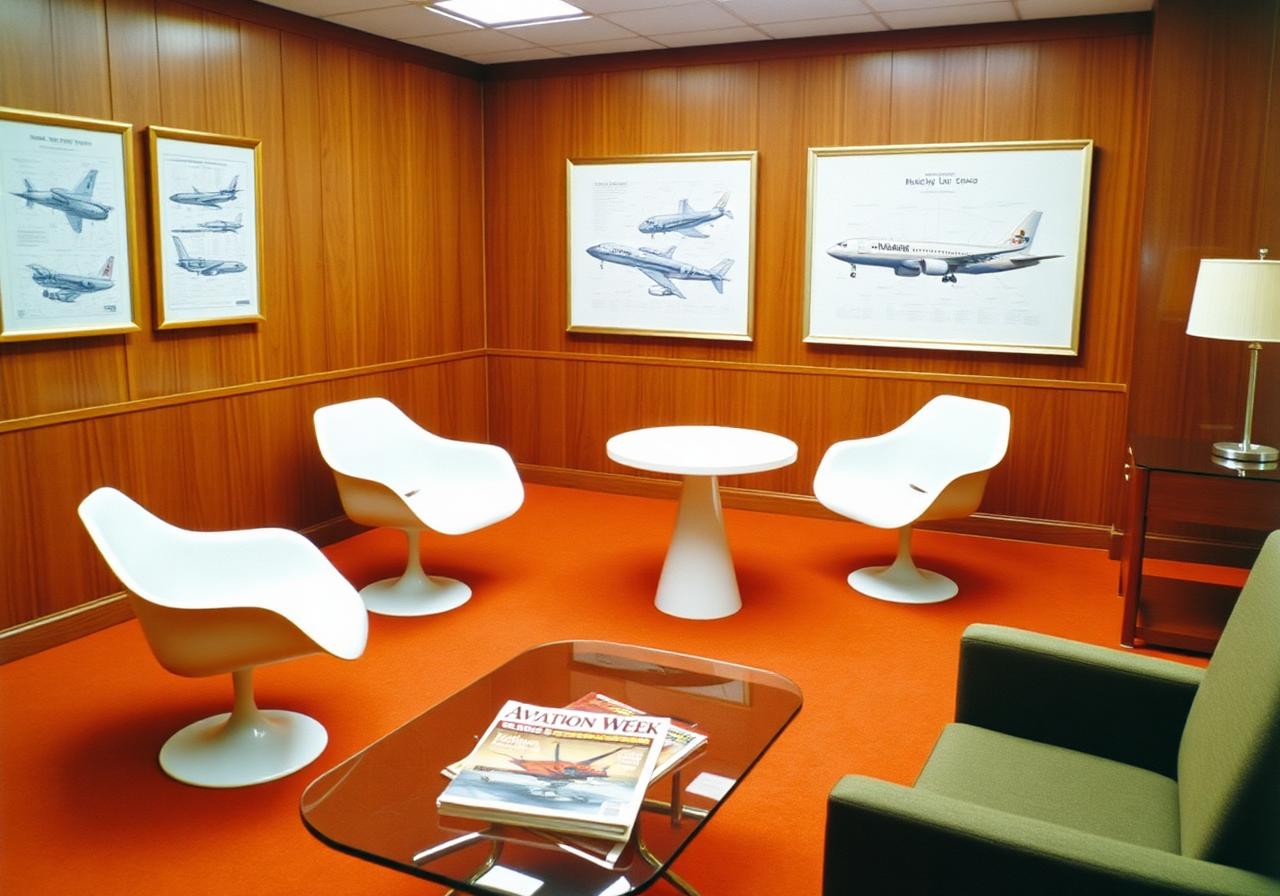
Saarinen, Eames, and the New Executive
Eero Saarinen's Tulip pedestal furniture appeared in airline conference rooms from New York to Frankfurt. Charles and Ray Eames's lounge chair became the preferred reading perch for chief pilots and CEOs alike — a piece engineered with the same care as an aircraft cabin.
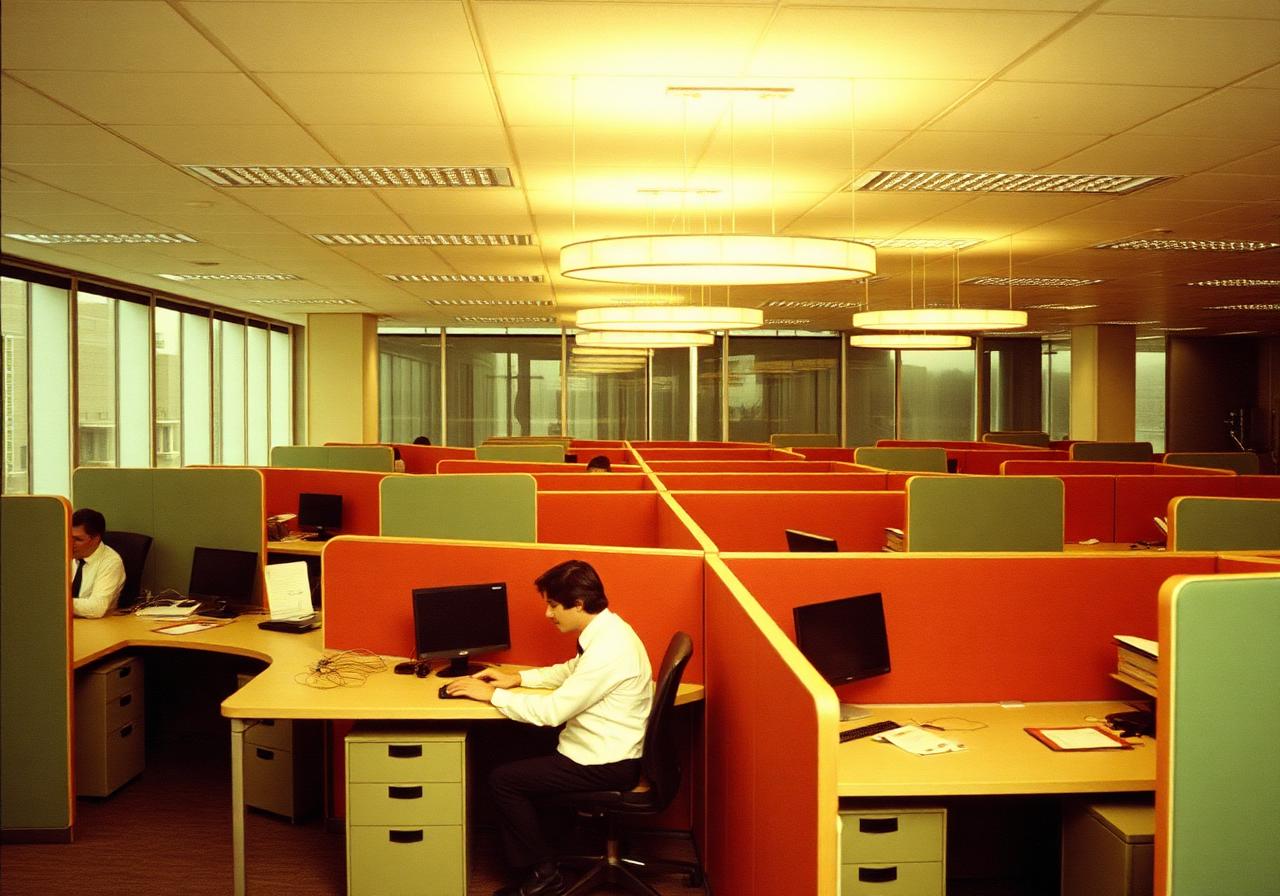
Herman Miller's Action Office
Robert Propst's Action Office system, launched in 1964, found early adopters at Boeing and Lockheed. Originally a vision of liberated, modular knowledge work, it allowed executives to reconfigure their suites as projects evolved — though it would later devolve into the cubicle.
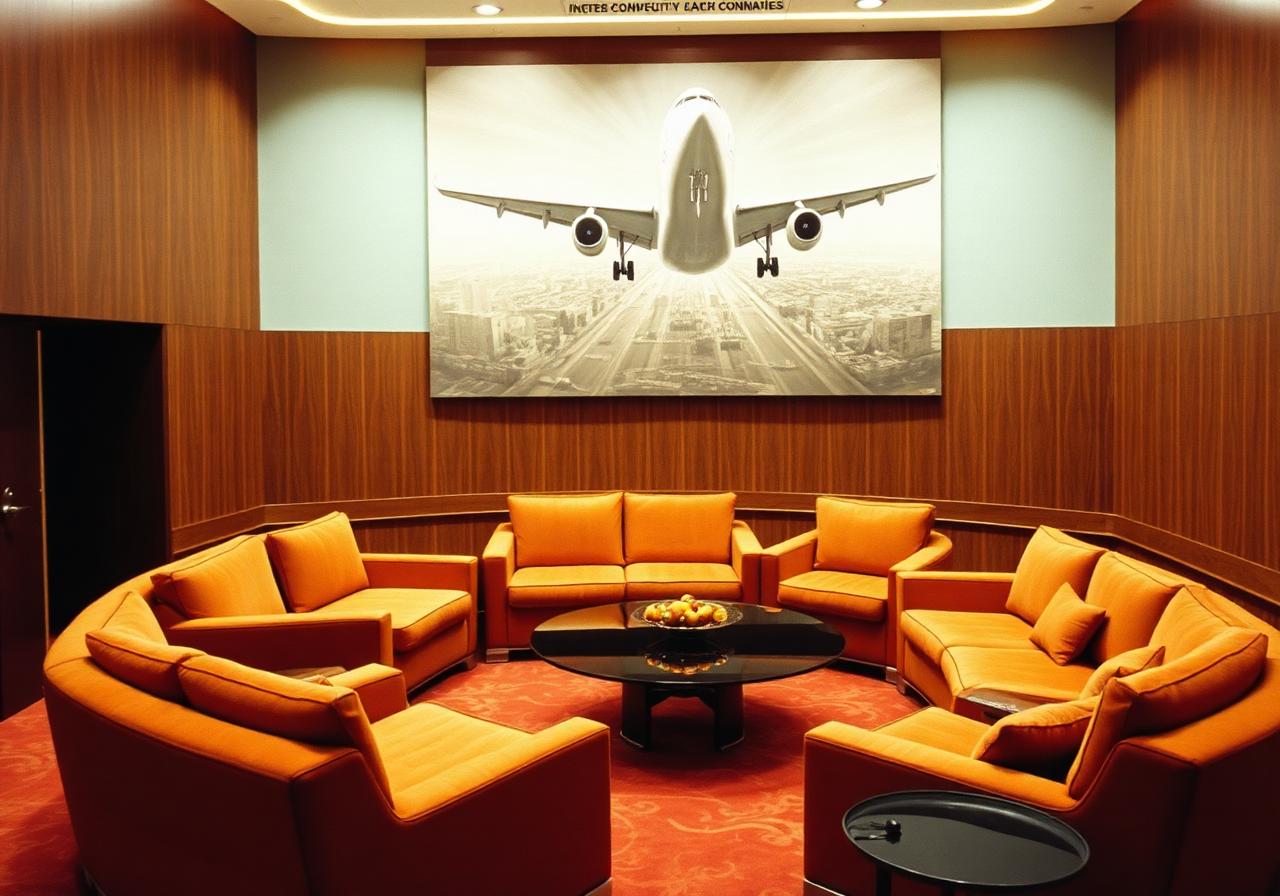
A Palette of Optimism
Burnt orange, avocado, walnut, and chrome dominated. Carpet ran wall to wall. Smoked-glass coffee tables held copies of Aviation Week, and conversation pits softened the geometry of otherwise austere corporate towers.
The boardroom goes branded
By the mid-70s, airline graphic design had reached the boardroom. Massimo Vignelli's American Airlines identity, Saul Bass's United program, and Landor's BA work all extended past the fuselage into wall finishes, presentation binders, and even the upholstery of conference seating. The executive suite became a continuation of the brand book — an idea that aviation arguably handed to the rest of corporate America.
Pieces from this era
Saarinen Tulip Chair
A single-pedestal cast-aluminum chair that erased what Saarinen called 'the slum of legs' under conference tables.
Saarinen Pedestal Table
The conference-room companion to the Tulip chair — a single cast-aluminum stem holding a marble top, completing Saarinen's campaign against the slum of legs.
Eames Lounge Chair (670)
Molded rosewood plywood and down-filled leather — the chief pilot's reading chair, and later the CEO's.
Herman Miller Action Office
The first modular office system — a utopian vision of reconfigurable knowledge work that aviation HQs adopted early.