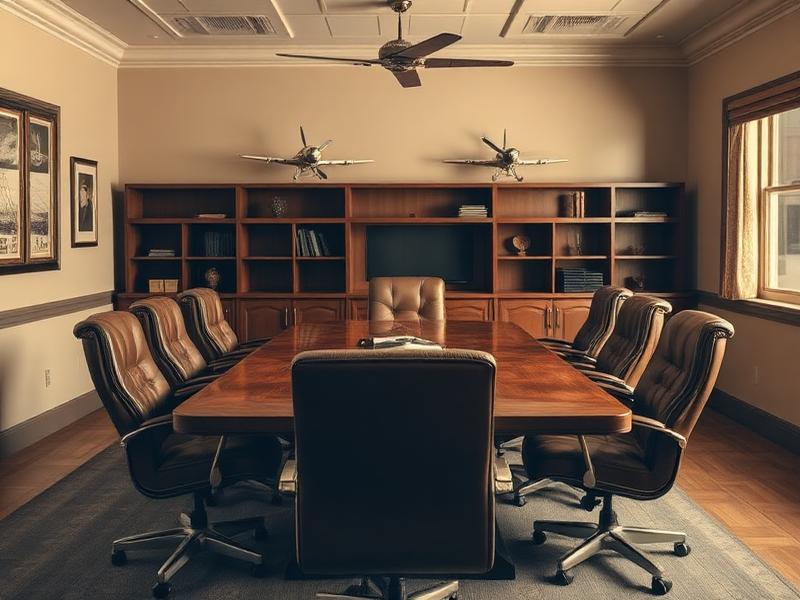
1940s – 1950s
The Golden Age of Mahogany & Leather
In the post-war boom, commercial aviation became a symbol of progress — and its leaders furnished their offices to match. Mahogany, brass, and tufted leather defined a generation of executive suites that doubled as theaters of negotiation.
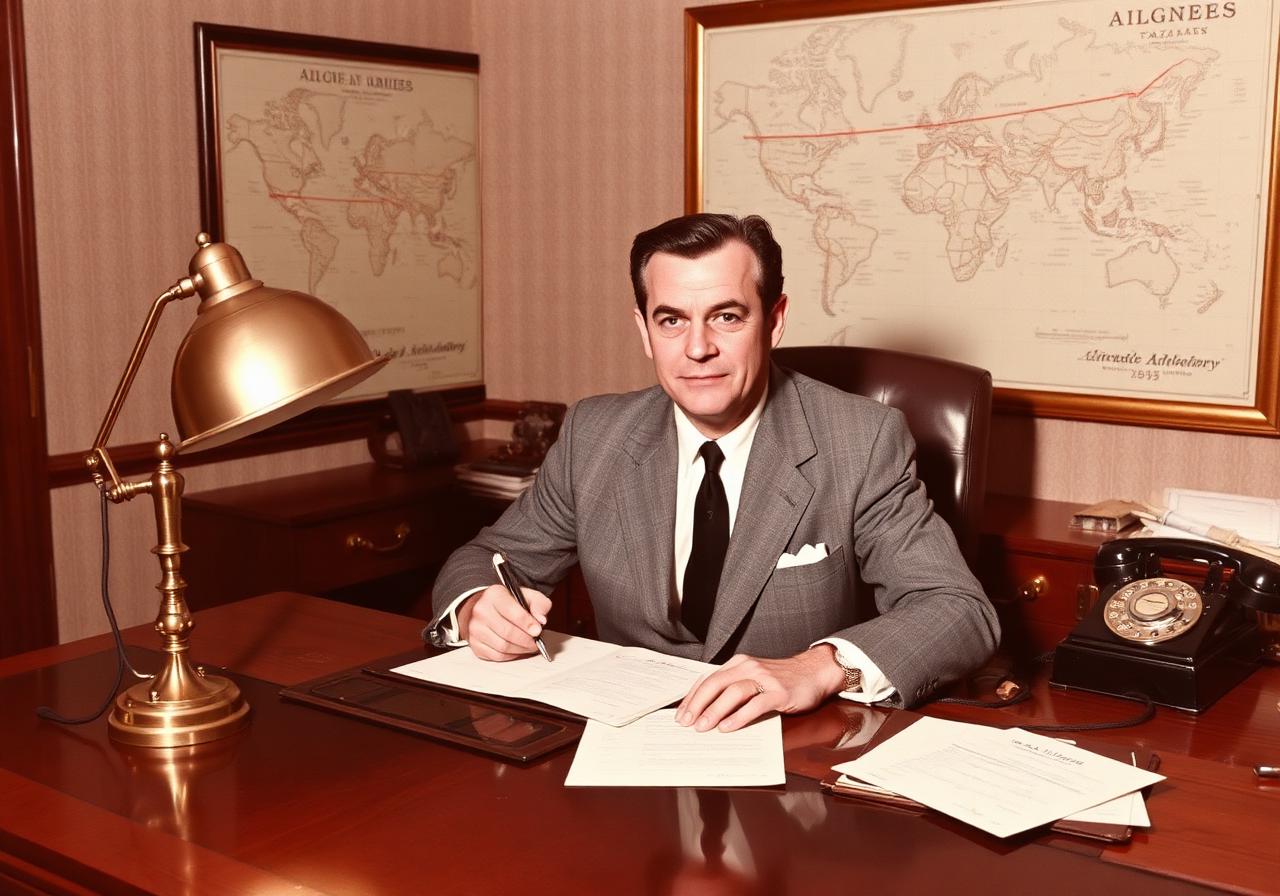
The Partner Desk as Throne
Pan Am's Juan Trippe and TWA's Howard Hughes both favored partner desks crafted from solid mahogany — vast, twin-pedestal pieces that signaled permanence in an industry built on motion. Leather inlays and brass hardware were standard; some desks weighed more than 600 pounds.
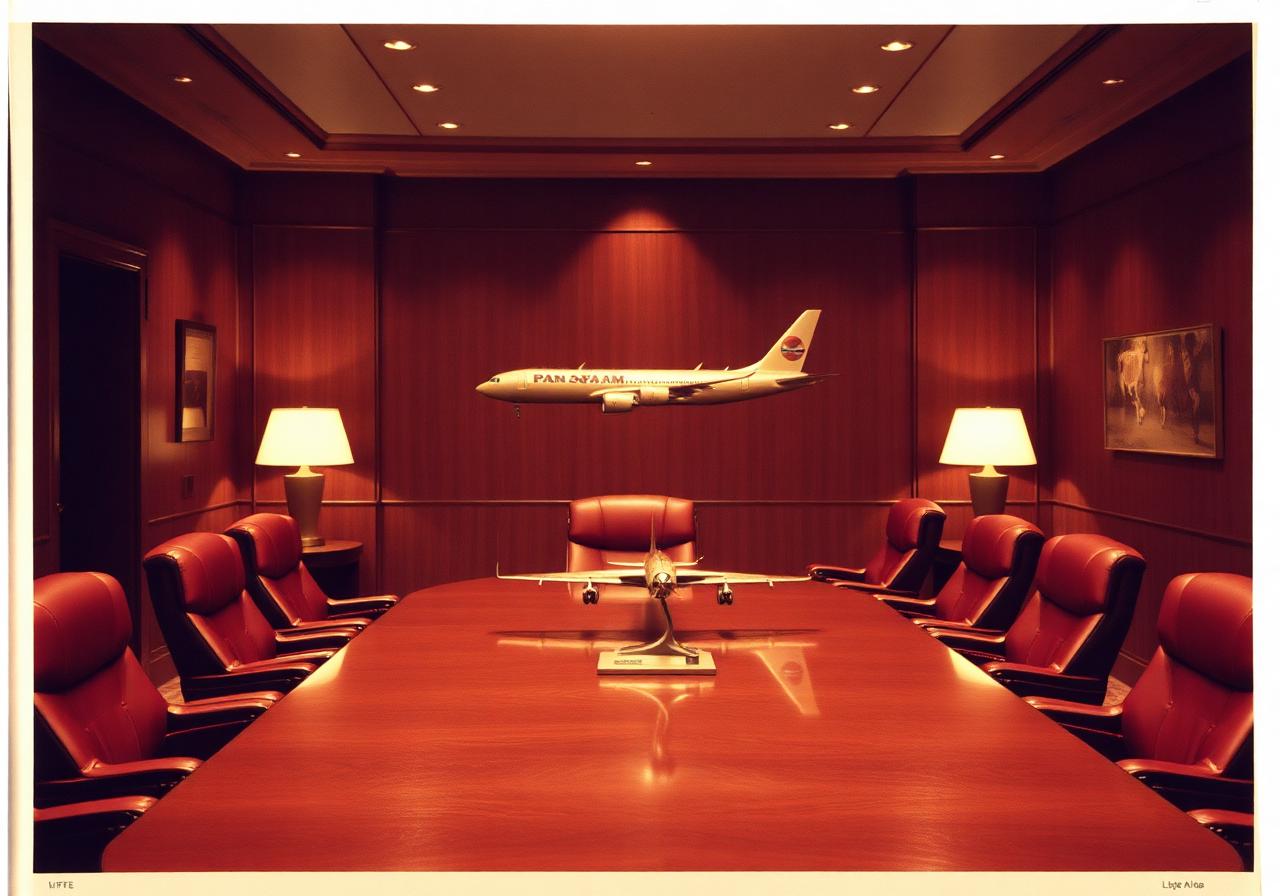
The Boardroom as Theater
Beyond the personal office, every major carrier built a flagship boardroom — a long, mirror-polished mahogany table flanked by tufted leather chairs, with a model of the carrier's newest aircraft set as a centerpiece. Pan Am's Park Avenue boardroom and TWA's Kansas City headquarters were widely photographed for trade press, and their interiors were carefully styled: the boardroom was as much a brand instrument as the livery on the tail.
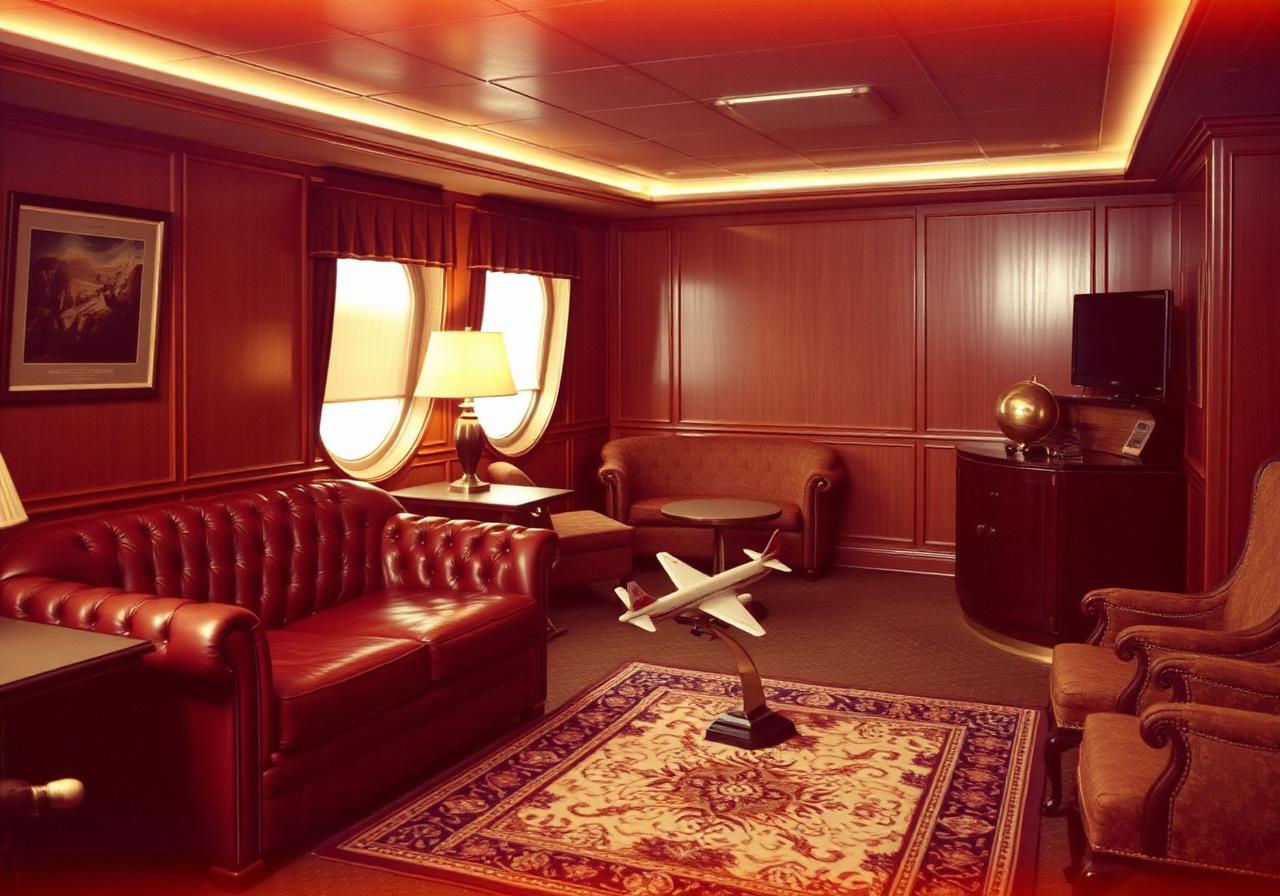
The Gentleman's Lounge
Adjacent to nearly every executive office sat a Chesterfield-furnished lounge. Here, deals for routes, fleets, and mergers were closed over scotch and cigars. The furniture borrowed heavily from English club tradition, lending airline boardrooms an old-world legitimacy that the young industry craved.
Memorabilia as Décor
Globe bars, brass altimeters, and scale models of DC-3s and Constellations served as both décor and corporate iconography — a visual reminder that the men behind the desks commanded the skies. Framed first-flight covers, signed photographs from Lindbergh or Earhart, and engraved silver propellers gifted by manufacturers all cluttered the credenzas. The office was a self-portrait of the industry.
Who actually furnished these rooms
Behind every founder's office stood a small ecosystem of suppliers. American carriers leaned on Grand Rapids workshops — Stickley, Sligh, and Imperial — to copy English forms at scale. Imperial Airways and BOAC bought directly from London's Maple & Co., Howard & Sons, and Heal's. The interior architects of the era — Raymond Loewy among them — quietly specified furniture in the same drawings that gave us the Lockheed Constellation cabin and the early Air Force One.
Pieces from this era
The Mahogany Partner Desk
A twin-pedestal mahogany desk, often weighing more than 600 pounds, that became the throne of every postwar airline founder.
The Chesterfield Sofa
Deep-buttoned, rolled-arm leather seating that turned every executive anteroom into a gentleman's club.
Saarinen Womb Chair
The chair Florence Knoll commissioned because she 'wanted a chair that was like a basket full of pillows — something I could really curl up in.'
Saarinen Executive Armchair (Model 71)
Saarinen's first Knoll commission — a sculpted molded shell on slim steel legs that quietly furnished half the boardrooms of the 1950s before the Tulip arrived.