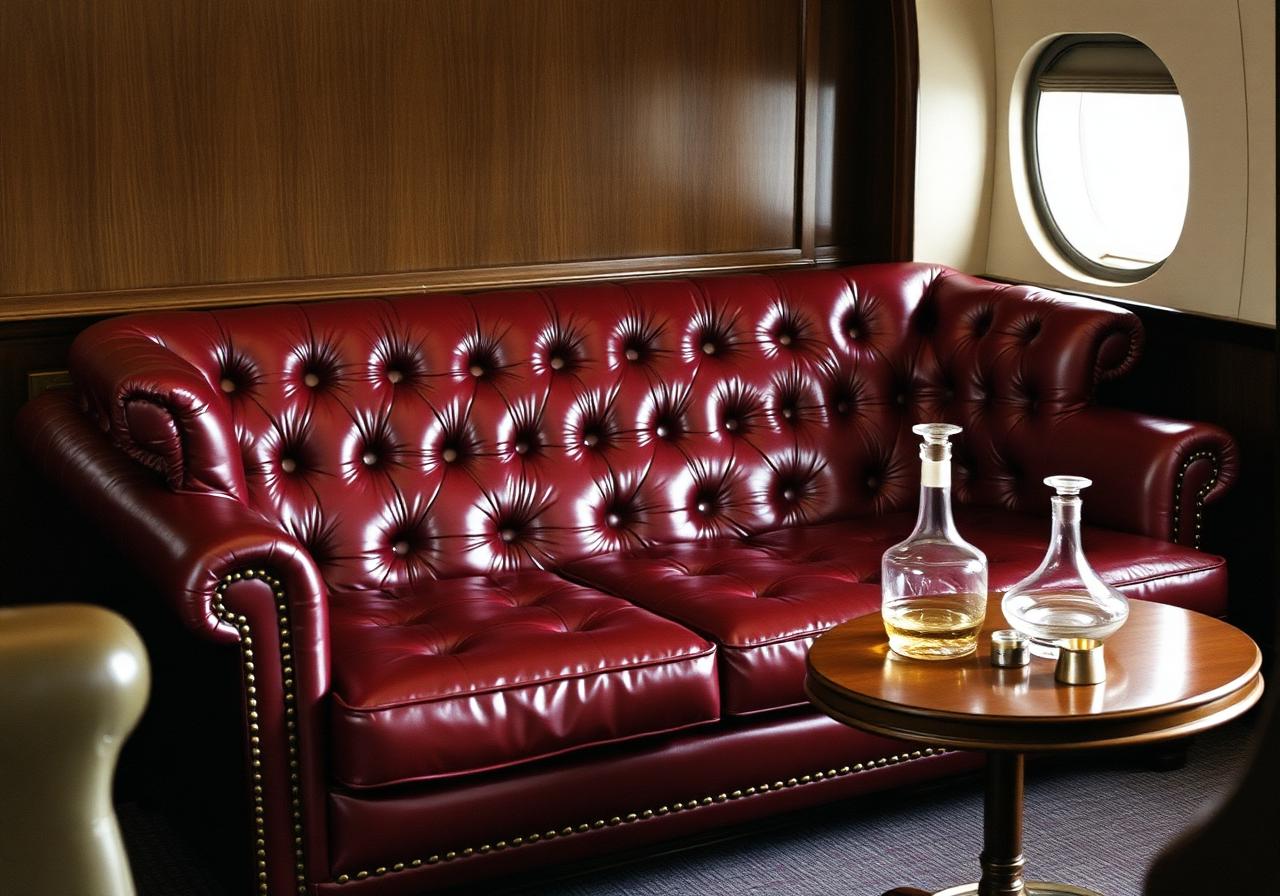
Deep-buttoned, rolled-arm leather seating that turned every executive anteroom into a gentleman's club.
Anatomy
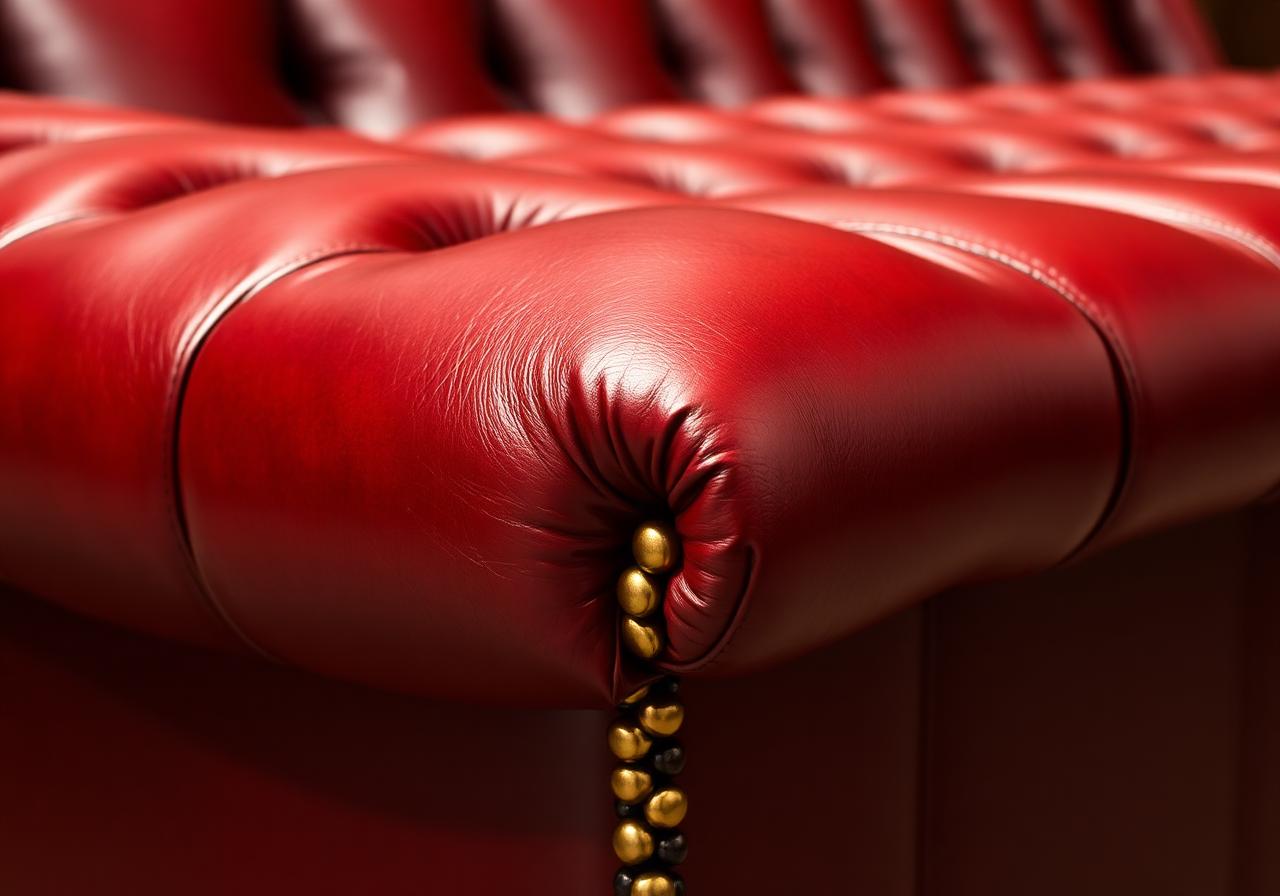
Hand-tied coil springs, horsehair padding, and full-grain aniline leather over a beech frame. The signature deep buttoning was originally engineered to keep the stuffing in place without it shifting under decades of use — it survived as pure ornament long after foam had made it functionally redundant. A traditionally-built example contains over 200 individually tied knots and takes a bench upholsterer roughly 80 hours to complete.
Role in the deal
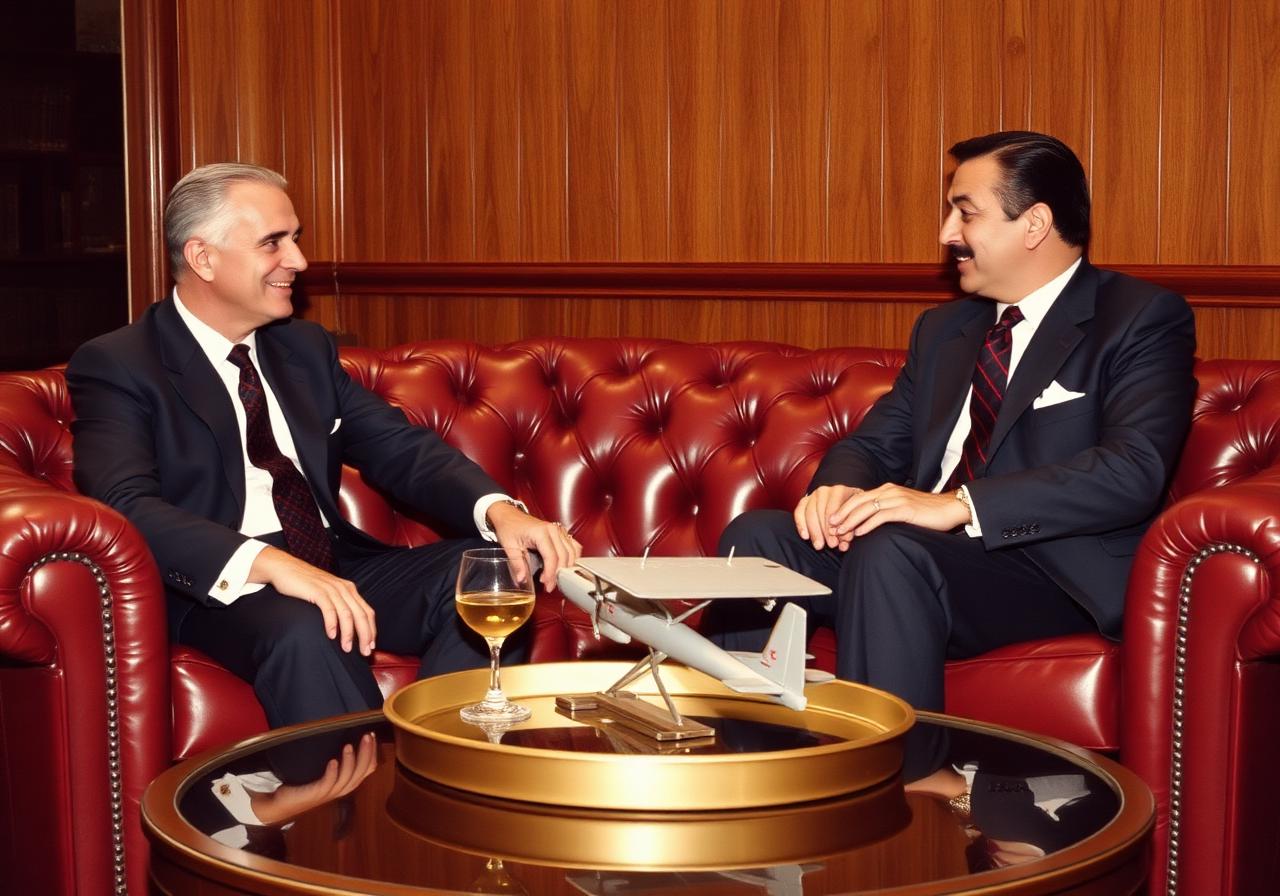
Route authorities, fleet orders, and merger talks were closed on Chesterfields, not at desks. The sofa softened hierarchy without surrendering it: the host took the armchair at the head of the low table, guests sank into the deeper sofa cushions opposite, and the height differential — perhaps an inch and a half — quietly did the political work.
Patina as currency
Unlike almost every other piece of executive furniture, a Chesterfield was understood to improve with visible wear. Cracked leather, darkened buttons, and a slightly collapsed seat cushion were taken as proof that the room had been used by serious people for serious things. Boardroom photographs from the 1960s show airline chairmen deliberately positioning a well-worn Chesterfield in shot — the visual equivalent of an aged single malt.
The decline
By the late 1970s, the Chesterfield read as somewhere between aristocratic and faintly embarrassing — too clubby for an industry trying to project deregulation-era dynamism. It was quietly replaced by low Knoll sofas and Eames lounge chairs in airline lobbies, surviving mainly in legacy carrier headquarters and in the private studies of chairmen who had started their careers in the propeller era.
An imported language
American carriers imported Chesterfields from Howard & Sons and Maple & Co. by the container; Grand Rapids workshops eventually copied the form for half the price. Either way, the visual code was English: clubland gravitas applied to the youngest industry on earth.
From the archive
Belongs to the era of
1940s–1950s · Mahogany & Leather →Manufactured by
Maple & Co. →More from the catalogue