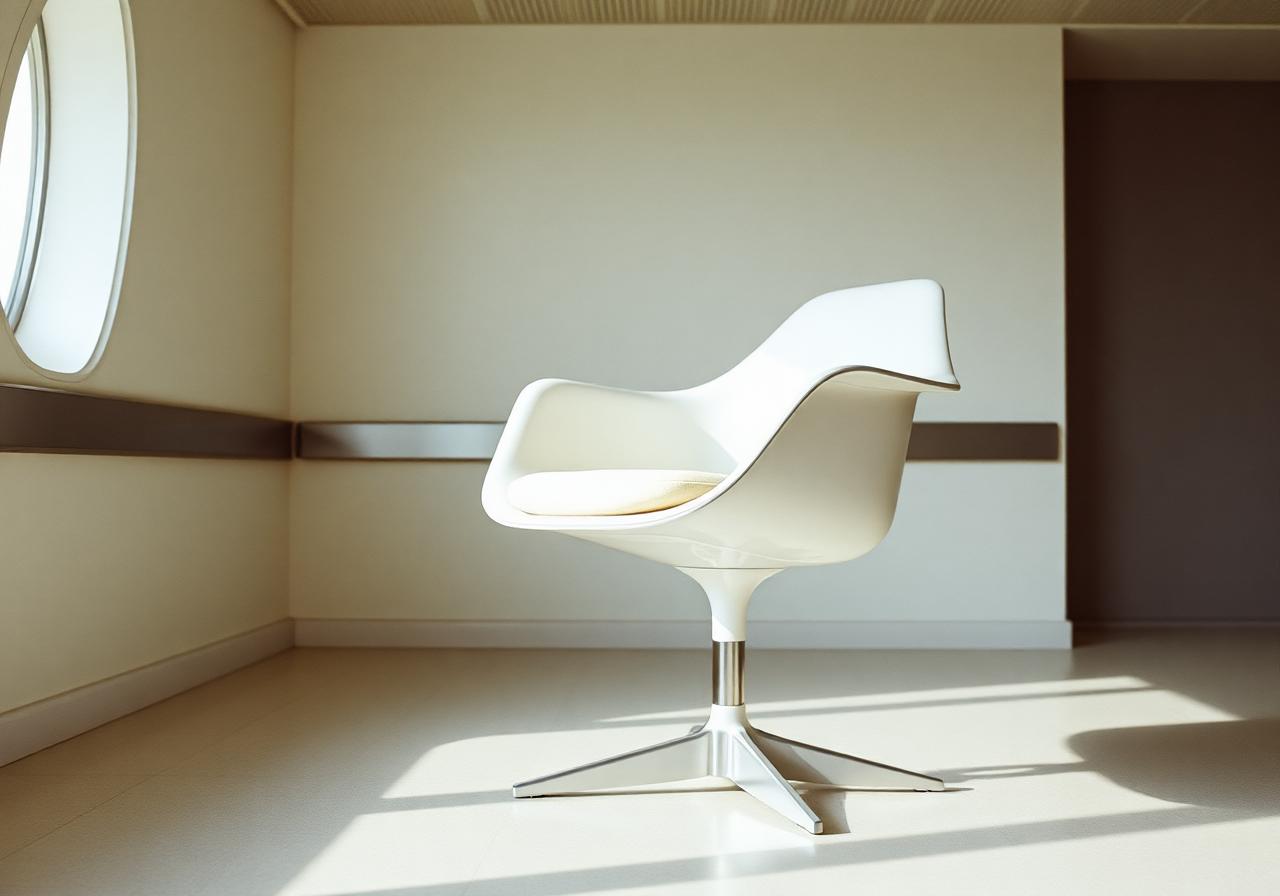
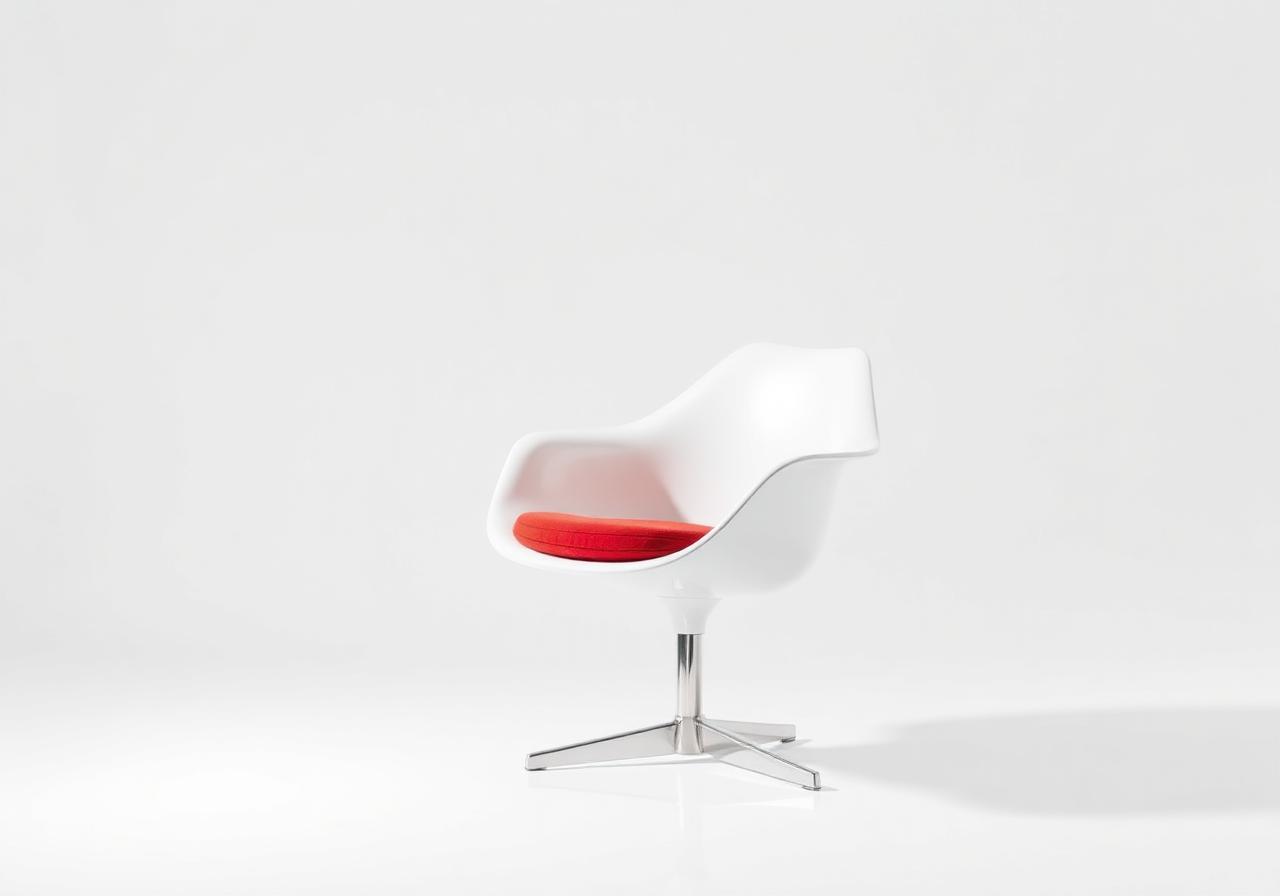
A single-pedestal cast-aluminum chair that erased what Saarinen called 'the slum of legs' under conference tables.
Materials
Molded fiberglass shell on a cast aluminum pedestal, finished in rilsan-coated white, with cushions in wool or leather. Saarinen's original brief to Knoll's engineers asked for a single-material chair — a shell and stem cast as one piece — but the materials science of 1957 could not deliver it. The compromise (fiberglass shell bonded to an aluminum base, then over-painted to disguise the seam) was meant as a temporary fix. Knoll has produced it that way ever since.
The slum of legs
Saarinen complained that 'the underside of typical chairs and tables makes a confusing, unrestful world' — the visual noise of sixteen or twenty splayed legs under a conference table. The Pedestal Collection's single stem was a deliberate visual silence: the eye stopped at the table edge and the chair seat, and the floor disappeared. In a boardroom photograph, the effect is unmistakable.
Aviation adoption
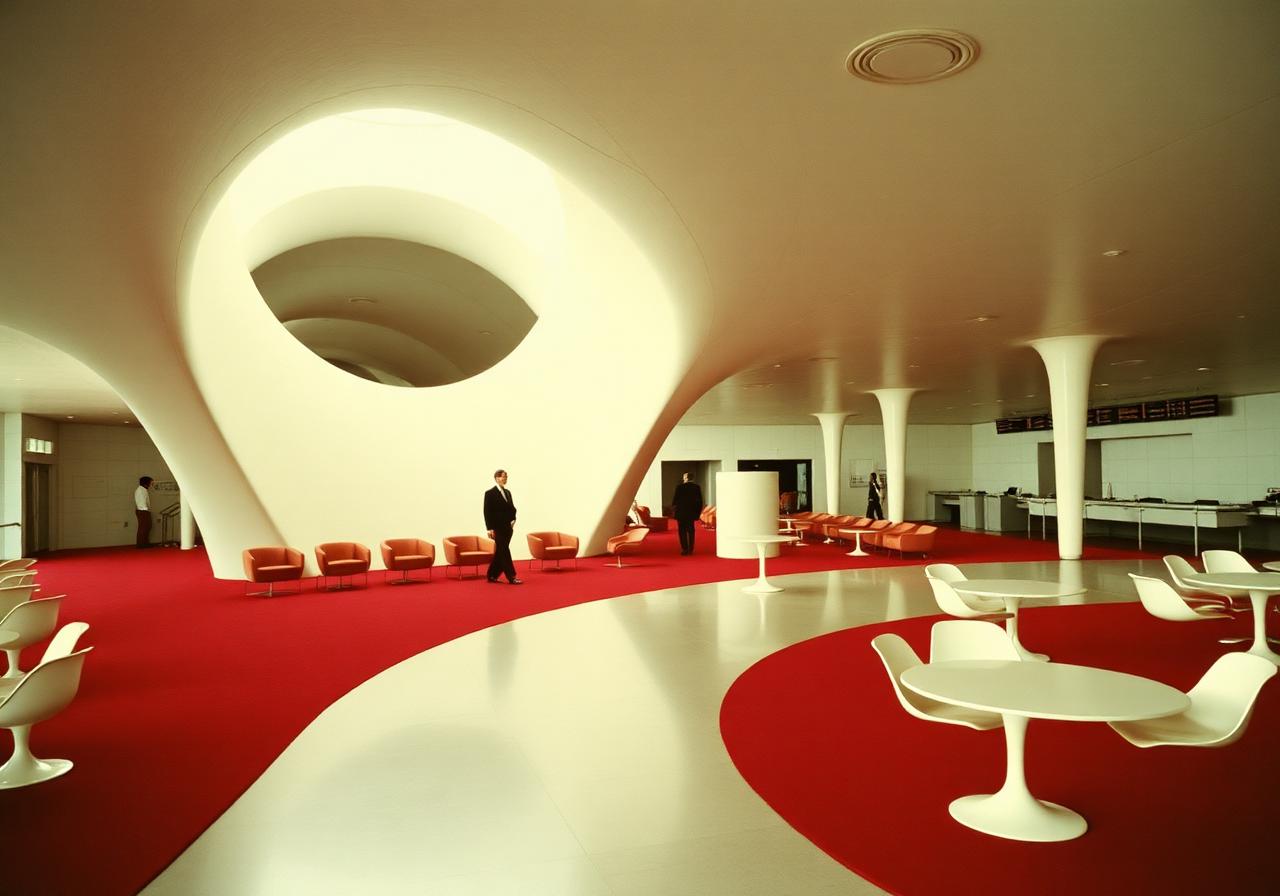
TWA's Eero Saarinen-designed Flight Center at JFK (1962) introduced executives to the Tulip series in situ. Within years it appeared in airline boardrooms from New York to Geneva. The chair's appearance in the TWA terminal — itself a Saarinen building — created a closed loop of architectural authority: the same hand had drawn the room, the table, and the chair you were sitting in.
The casting problem
Each pedestal is sand-cast aluminum, then machined, then powder-coated, then over-coated in white rilsan to hide the join with the fiberglass shell. The process is essentially unchanged since 1957 and remains expensive — a current Knoll Tulip armchair retails for over $3,500. The price is partly material, mostly labor, and entirely the cost of refusing to redesign a chair that was supposed to have been redesigned within a decade.
Still in production
Knoll has manufactured the Tulip continuously since 1957 — one of the longest unbroken production runs in modern furniture. Sixty-plus years on, it still appears in the boardrooms of carriers Saarinen never lived to fly with.
From the archive
Belongs to the era of
1960s–1970s · Jet Age Modernism →Manufactured by
Knoll →More from the catalogue