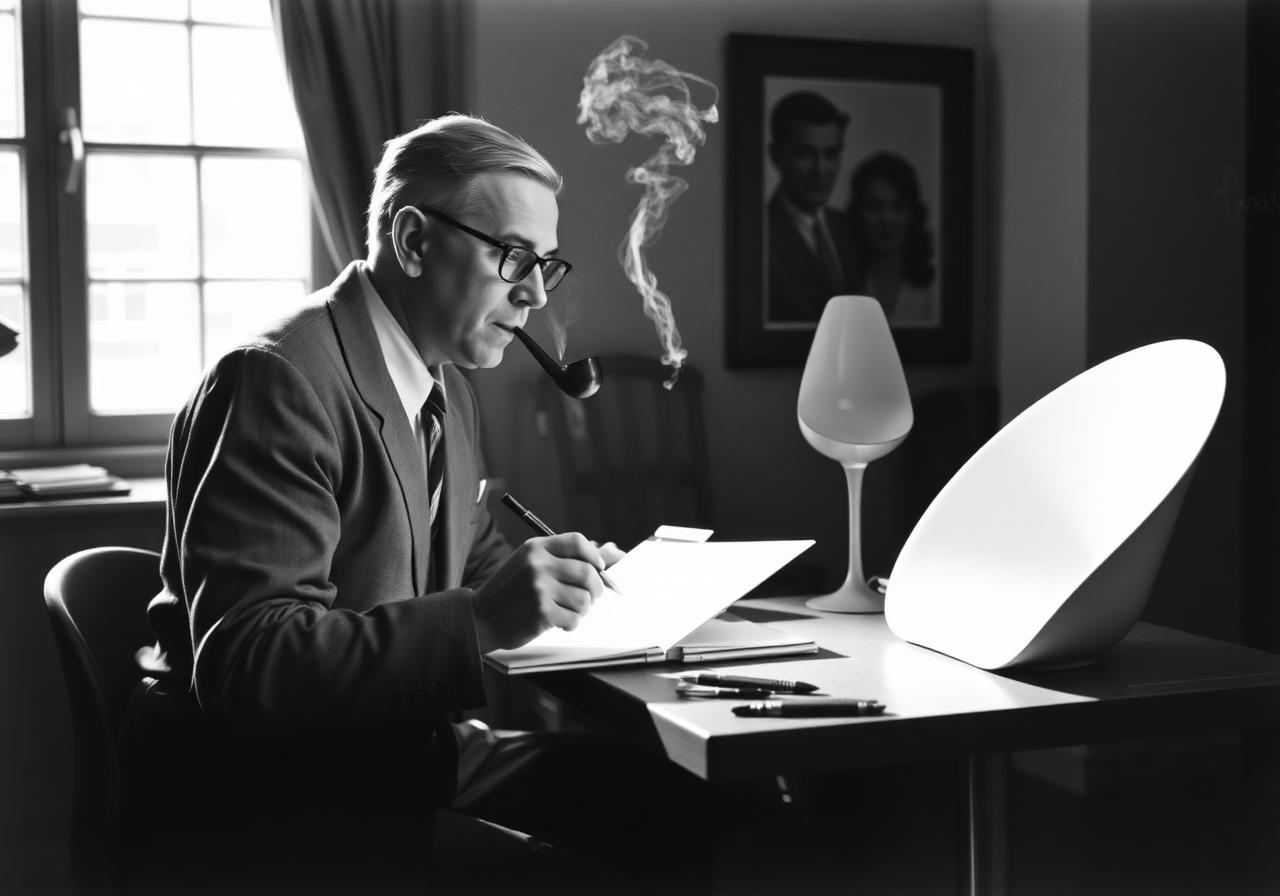
The architect who designed both the TWA Flight Center and the chair that sat inside it — Saarinen turned aviation interiors into total works of design.
From terminal to tabletop
Trained as an architect under his father Eliel — the founding director of the Cranbrook Academy of Art — Saarinen approached furniture the way he approached buildings: as sculpted volume rather than assembled parts. His 1957 Pedestal Collection for Knoll, with its single cast-aluminum stem, was an attempt to clear what he called 'the slum of legs' from the modern interior. The original brief, never realized in his lifetime, was for a single-material chair cast as one continuous piece — the seam between fiberglass shell and aluminum base was the compromise that materials science of the day forced on him.
The TWA commission
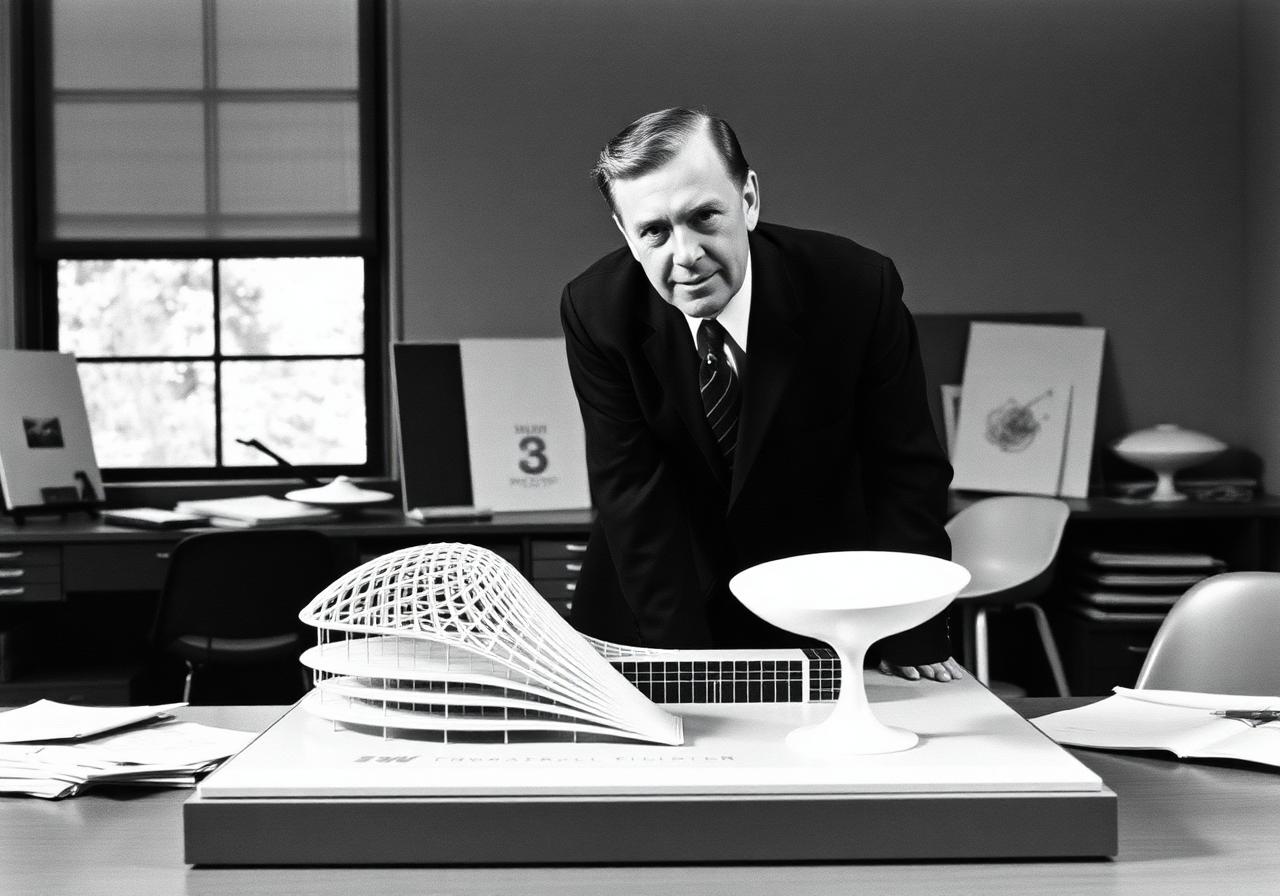
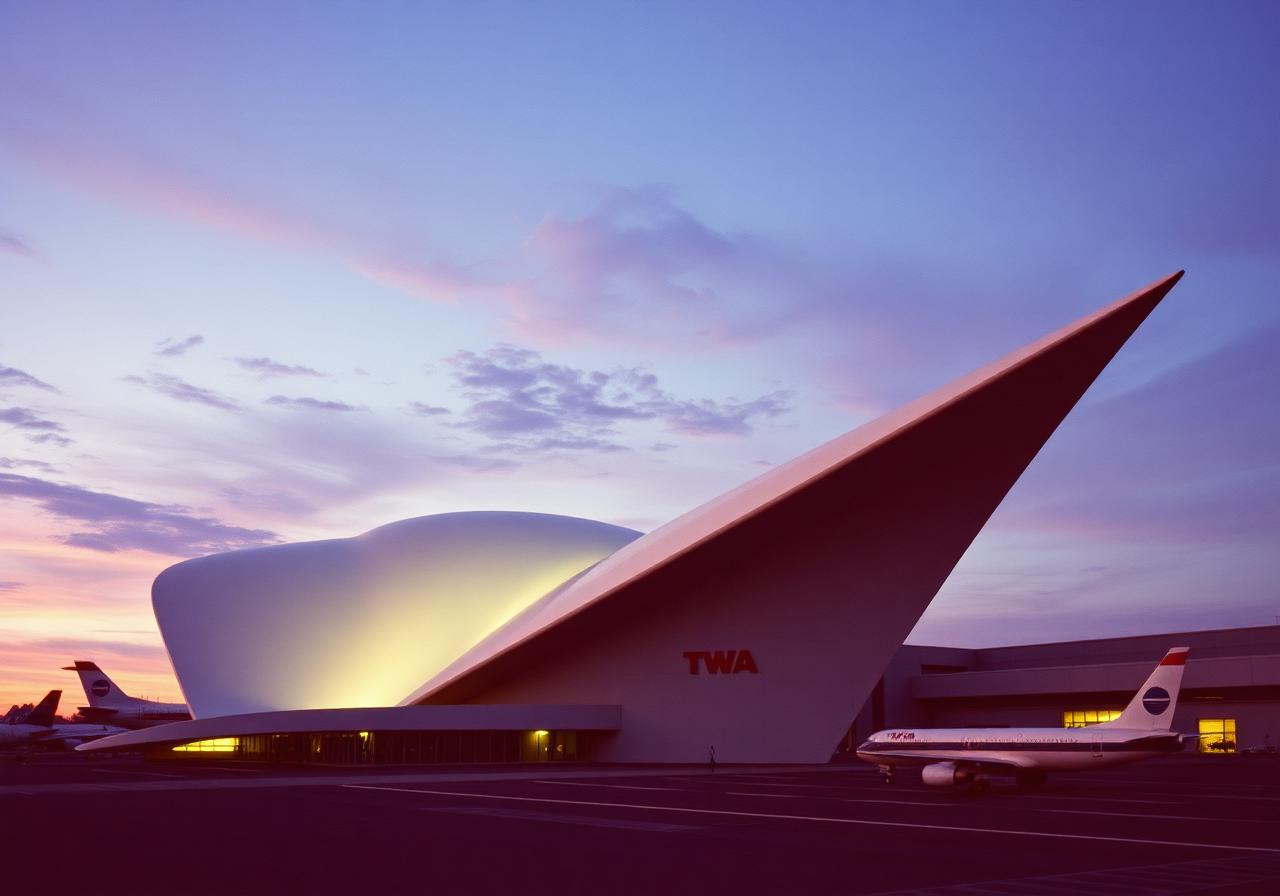
Saarinen's swooping TWA Flight Center at JFK (designed 1956–62, completed after his death) became the architectural manifesto for jet-age air travel. He approached it as a single sculptural gesture — the roof, ticketing islands, departure lounges, and even signage all curving into one another with no orthogonal corner anywhere in the public spaces. Tulip chairs and pedestal tables furnished its lounges, and the visual rhyme between the building and its furniture was deliberate: passengers were meant to read the terminal and the chair as the same thought, in different scales. Within five years the chairs had migrated into airline executive boardrooms from New York to Geneva, the building's authority traveling with them.
Legacy in the executive suite
The Pedestal Collection remains in continuous production at Knoll, with the original tooling and the original tolerances — a rarity in modern furniture, where most 1950s designs have been quietly re-engineered for cheaper manufacture. Sixty years on, it still appears in the conference rooms of Boeing, Airbus, and Emirates Executive, and in the executive lounges of nearly every major hub airport. The chair has outlived not only its designer but most of the airlines that first installed it: a quiet through-line from terminal to boardroom, from Pan Am to its successors three corporate generations down the line.
Unfinished work
Saarinen died at 51 of a brain tumor, mid-career, with the TWA terminal, Dulles Airport, the Gateway Arch in St. Louis, and the CBS Building in New York all unbuilt or unfinished. His office — led by partners Kevin Roche and John Dinkeloo — completed the work over the following decade, faithfully and without much credit. The furniture remained unmistakably his: single-stem, sculptural, refusing to apologize for its own confidence. He left behind perhaps a dozen built works and one of the most concentrated bodies of late-modernist design any single architect has produced.
Pieces by this designer
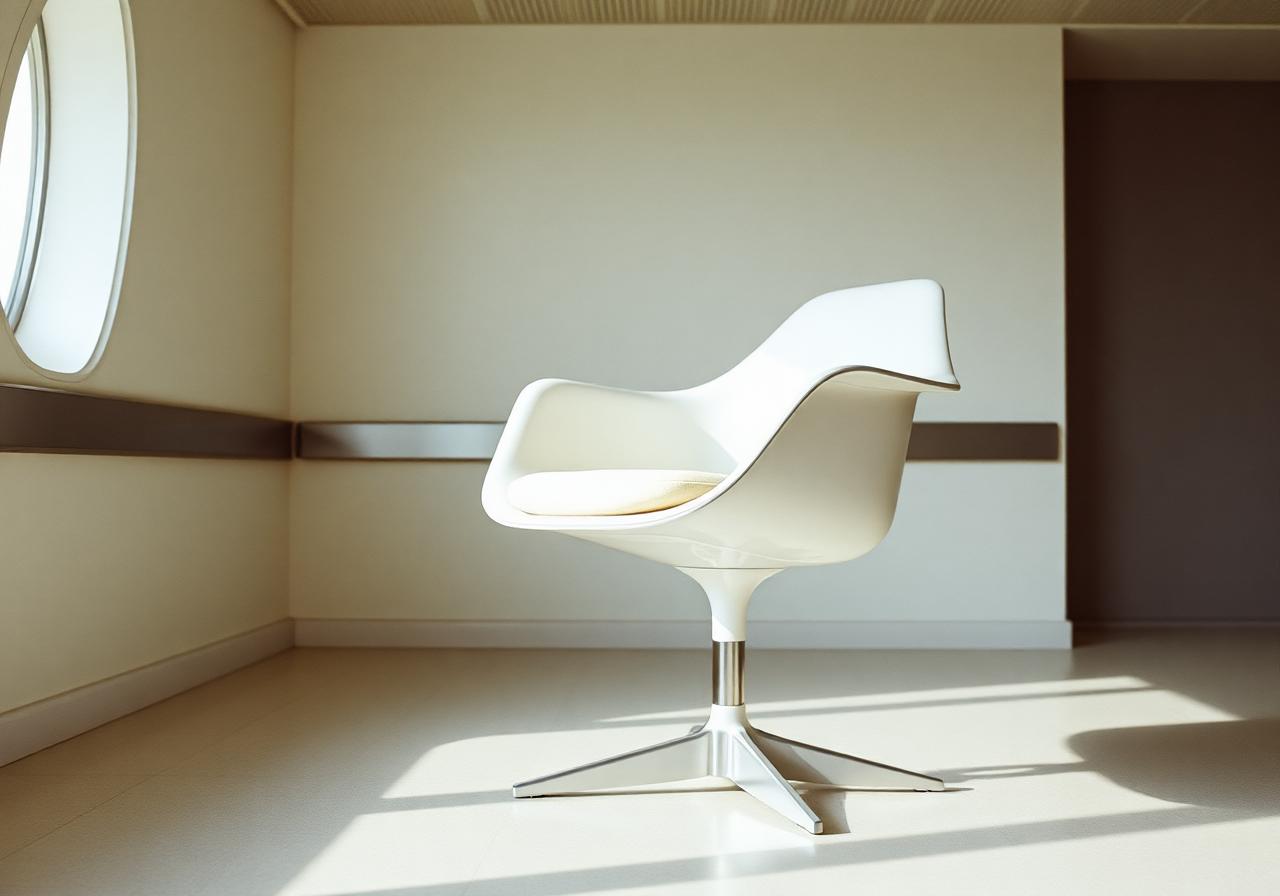
Saarinen Tulip Chair
A single-pedestal cast-aluminum chair that erased what Saarinen called 'the slum of legs' under conference tables.
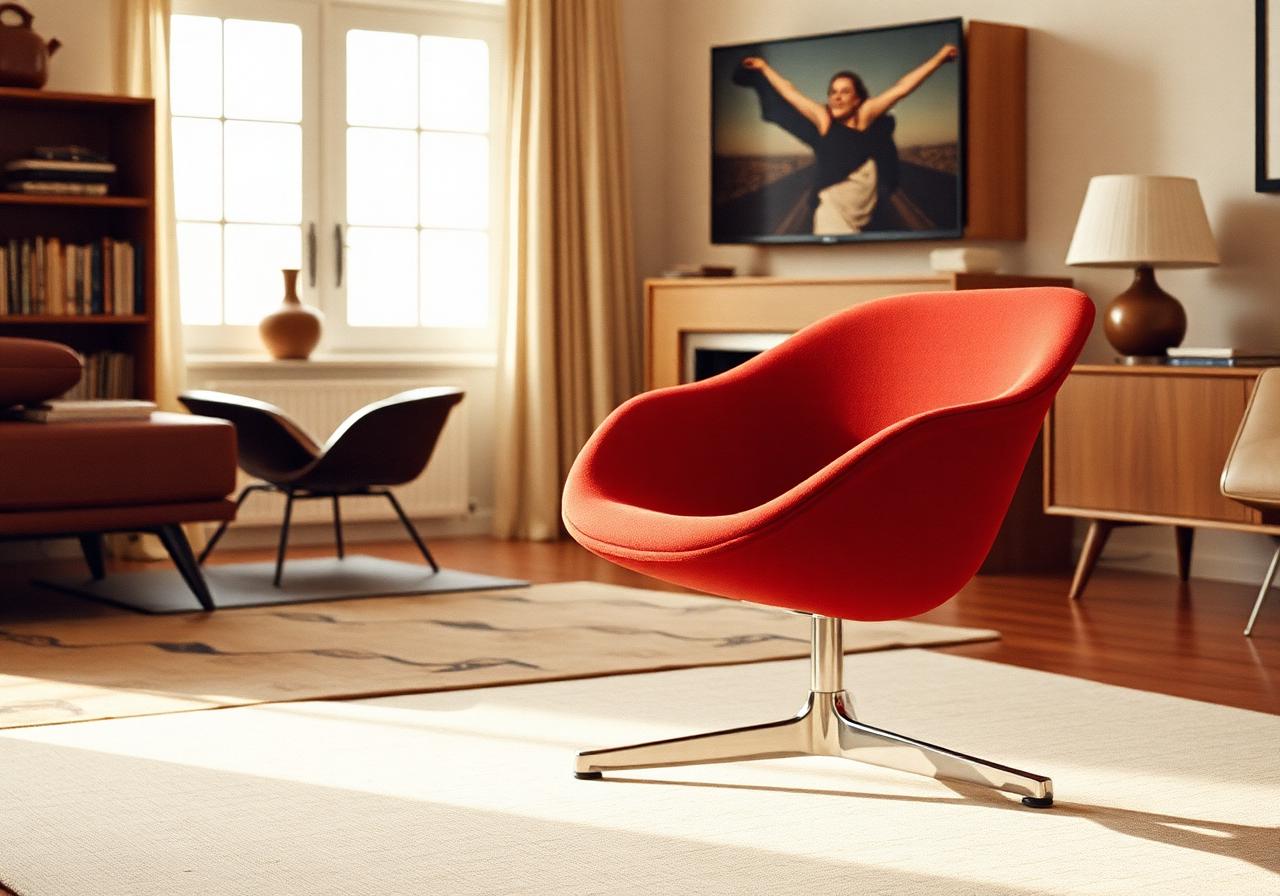
Saarinen Womb Chair
The chair Florence Knoll commissioned because she 'wanted a chair that was like a basket full of pillows — something I could really curl up in.'
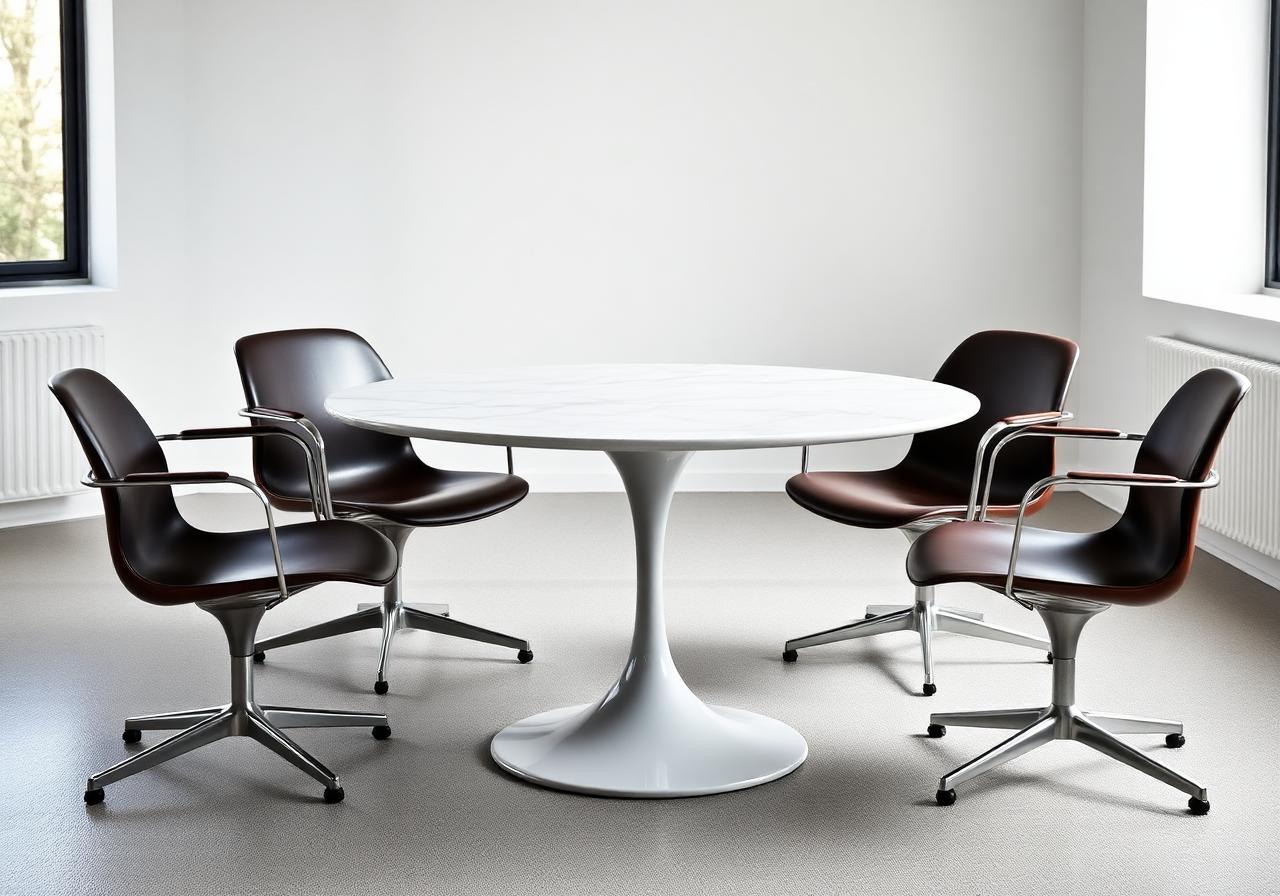
Saarinen Pedestal Table
The conference-room companion to the Tulip chair — a single cast-aluminum stem holding a marble top, completing Saarinen's campaign against the slum of legs.
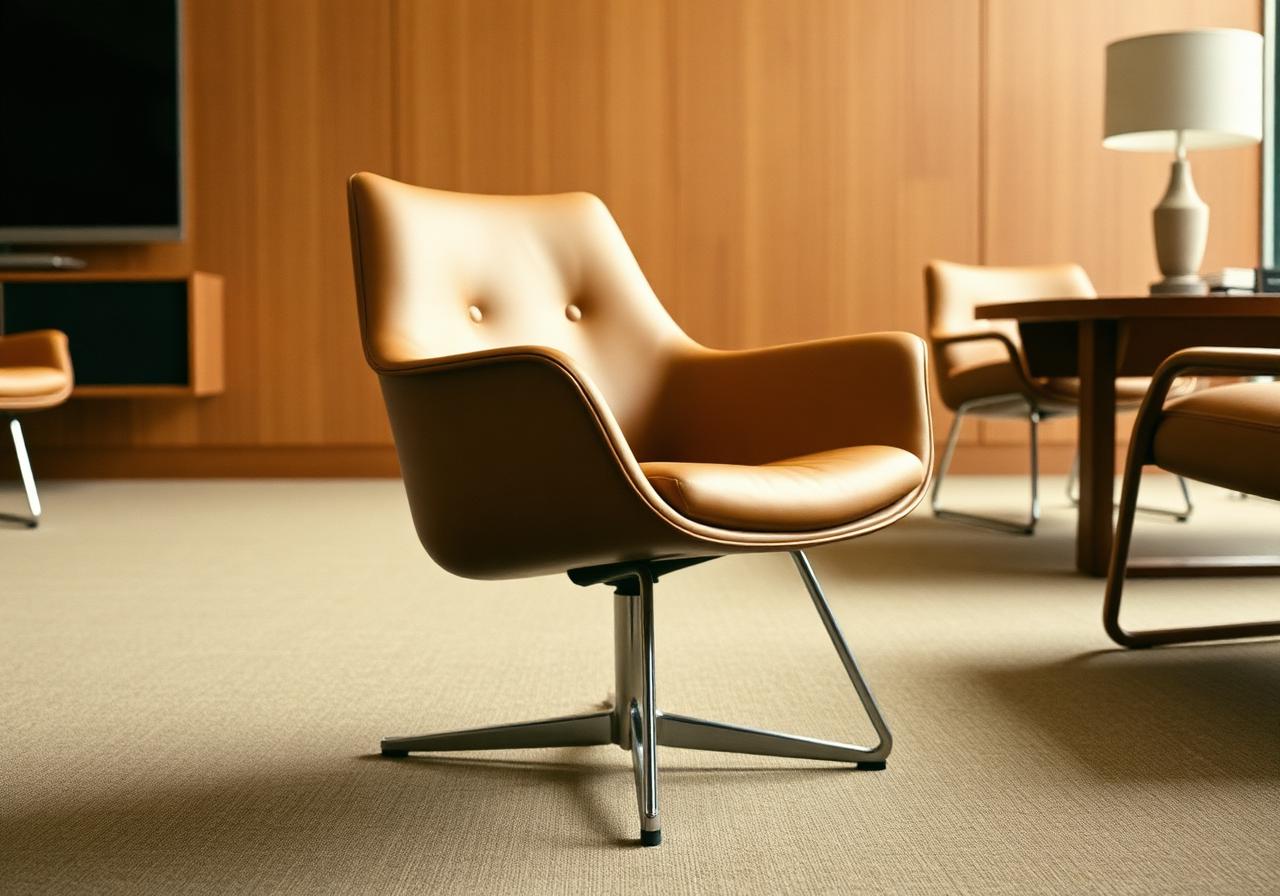
Saarinen Executive Armchair (Model 71)
Saarinen's first Knoll commission — a sculpted molded shell on slim steel legs that quietly furnished half the boardrooms of the 1950s before the Tulip arrived.
Belongs to the era of
1960s–1970s · Jet Age Modernism →Manufactured by