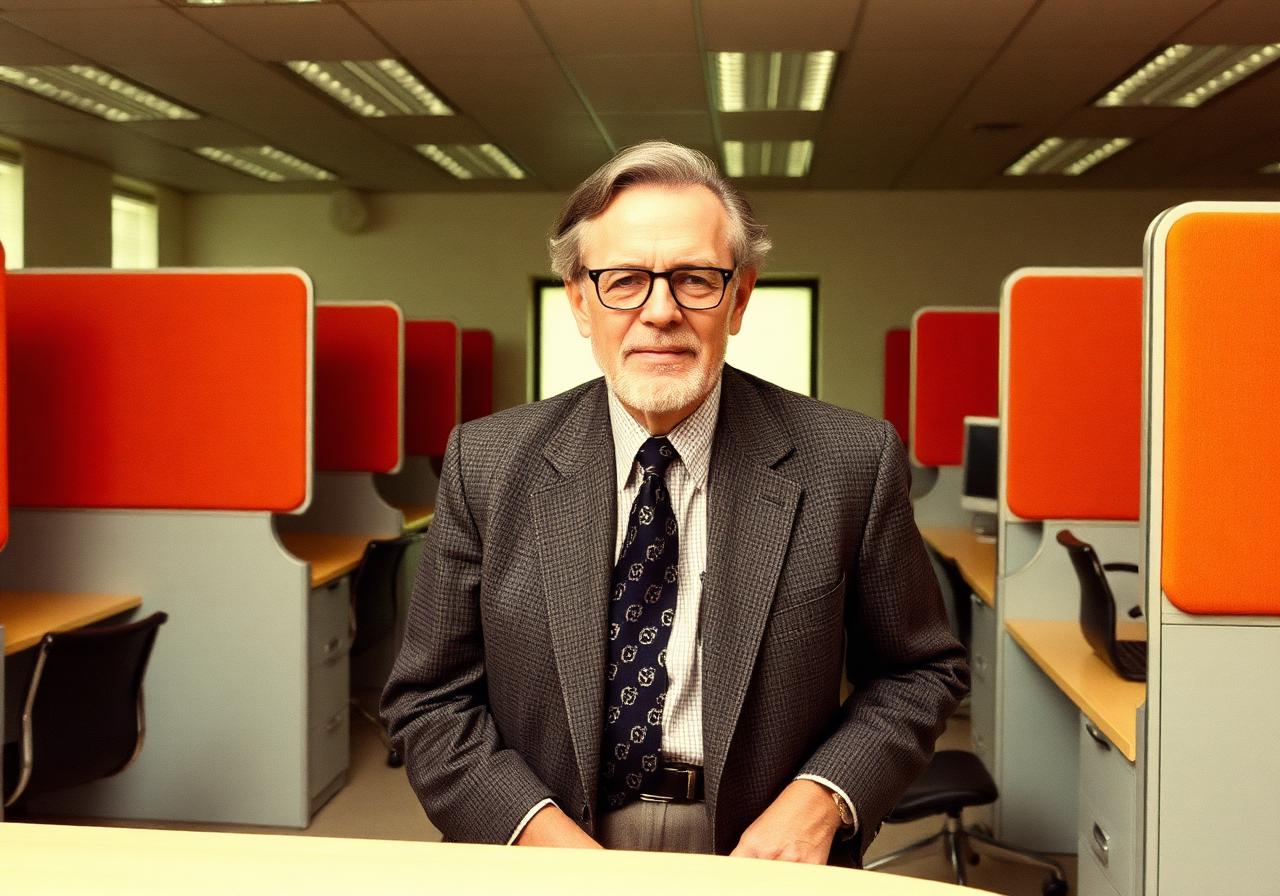
The polymath inventor who imagined a liberated, modular office for knowledge workers — and watched it devolve into the cubicle.
A scientist among designers
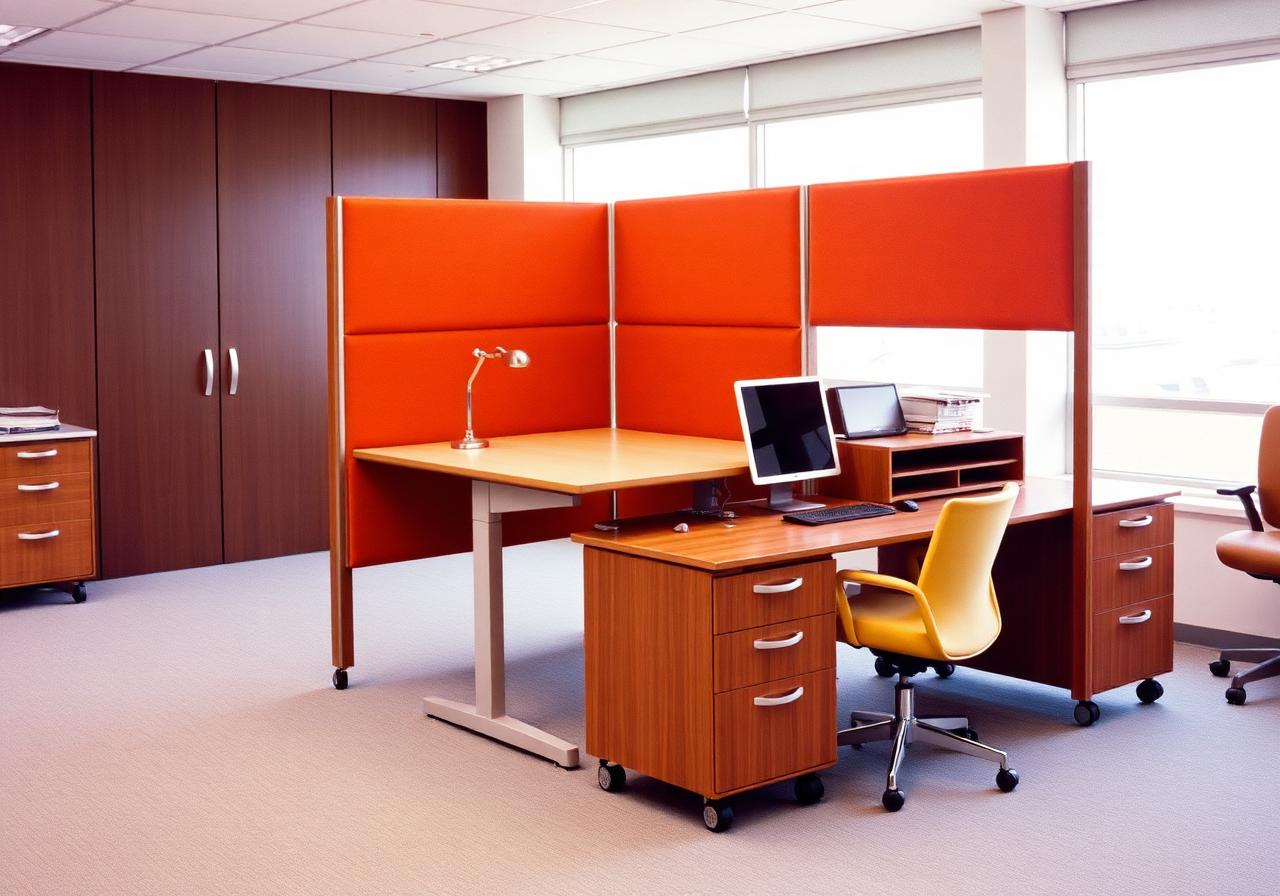
Propst was not a furniture designer — he was a sculptor, inventor, and head of Herman Miller's Research Corporation, the company's pure-research arm in Ann Arbor. He held degrees in art and applied mechanics and approached the office the way an industrial engineer approaches a factory floor: as an environment to be measured, charted, and redesigned around the actual work. He spent two years interviewing executives, secretaries, and middle managers across more than thirty corporations — IBM, Lockheed, Westinghouse, the FAA — before drawing a single line of furniture. Action Office (1964, fundamentally revised as Action Office II in 1968) was the system that emerged from those notebooks: standing surfaces, mobile screens, modular storage, and a working assumption that any single configuration would last no more than eighteen months.
Aviation as an early adopter
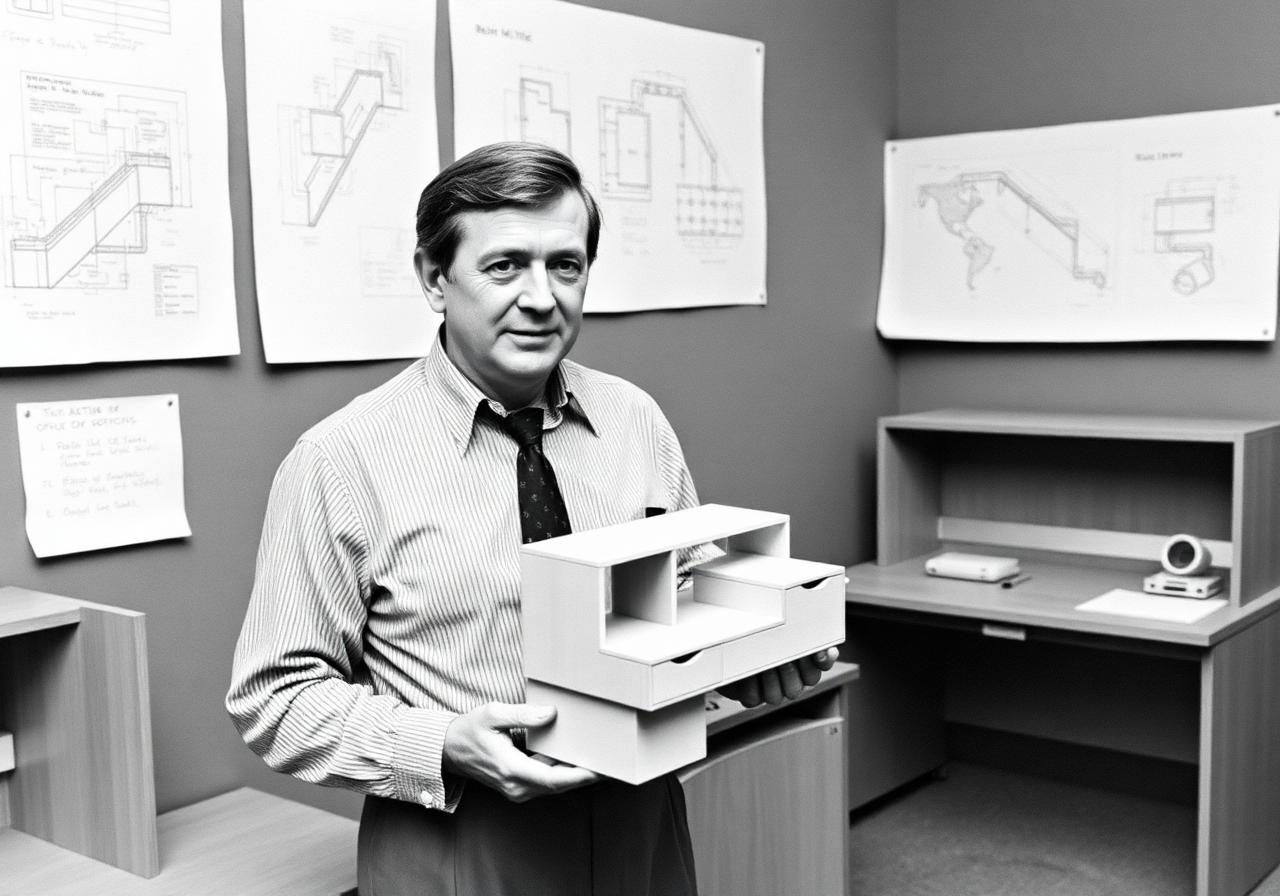
Boeing's Renton site and Lockheed's Burbank campus were among the first large-scale Action Office II installations, in 1969 and 1970 respectively. The system suited the program-management culture of aerospace — engineering teams that re-formed by project, not by reporting line, and needed to physically reconfigure their environment every few months as a 737 line moved from design to certification to production support. NASA followed at Houston in 1971; the FAA's Washington headquarters installed Action Office across three floors in 1972. For nearly a decade, aerospace was the system's most visible reference customer.
Disowning his own creation
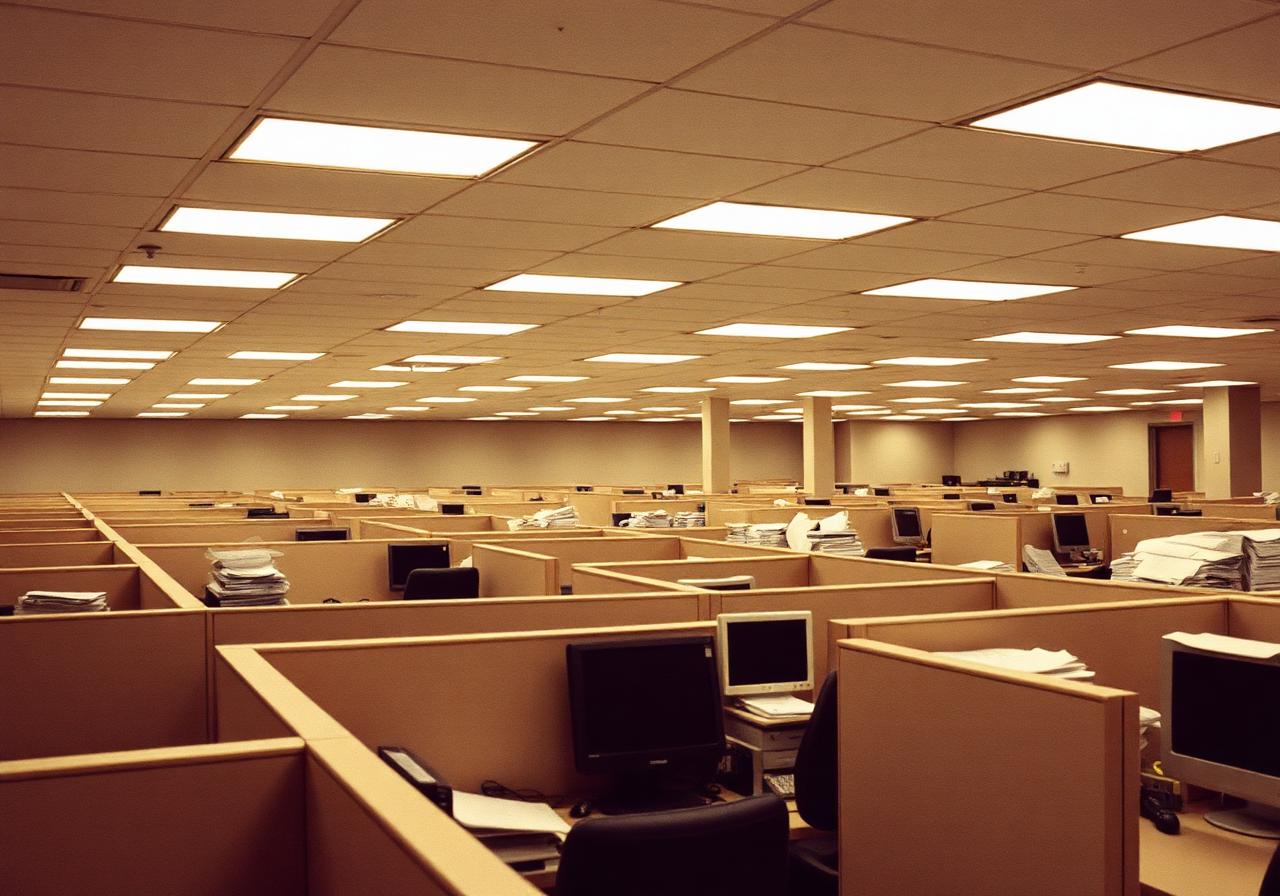
By the 1990s, the system had been stripped down by other manufacturers — Steelcase, Haworth, and dozens of smaller suppliers — into the cost-cut cubicle: shorter panels, no standing surfaces, no mobility, fluorescent lighting overhead instead of task lighting at the desk. Propst publicly mourned the result in a 1997 Metropolis interview, calling it 'monolithic insanity' and arguing that the cubicle had inverted every principle Action Office was meant to embody. It is a rare and uncomfortable case of a designer outliving and disowning his most successful product, and his interviews from the late 1990s read as a long, careful disclaimer attached to an invention he could no longer control.
Patents beyond the office
Propst held over 120 patents across a working life that ranged extraordinarily wide: livestock-handling chutes for cattle ranches, mechanized timber-harvesting equipment, hospital nurse-station logistics, even a redesigned classroom for elementary schools. Action Office was only the most visible application of a research method he applied everywhere: study the work, draw the worker, then build the environment around what you actually saw — never around what management told you was happening. Few designers have been so right about the principle and so betrayed by the execution. He died in 2000, and Herman Miller's product literature for the Living Office, launched a decade later, was in essence an extended apology and a return to his original brief.
Pieces by this designer
Belongs to the era of
1960s–1970s · Jet Age Modernism →Manufactured by