
The first modular office system — a utopian vision of reconfigurable knowledge work that aviation HQs adopted early.
The idea
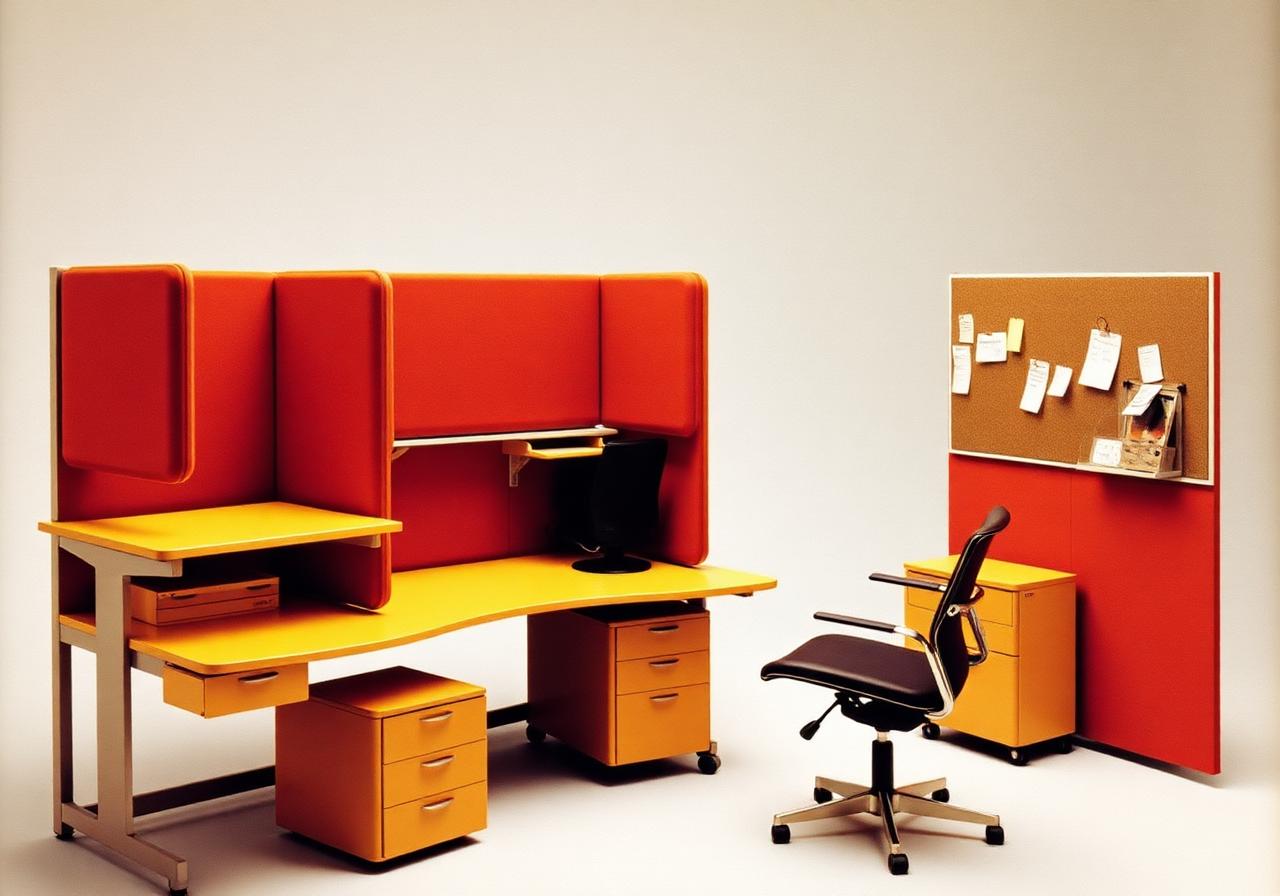
Propst believed the static desk was a cage. Action Office offered standing surfaces, mobile screens, and modular storage so a worker could reshape their environment by project — closer to a flight deck than a clerk's desk. He drew explicitly on time-and-motion research from Frederick Herzberg and on field studies he had conducted inside dozens of corporations, including Lockheed and the FAA.
Action Office I and II
The original 1964 system used heavy, freestanding pieces in oak and aluminum — beautiful, expensive, and a commercial flop. The 1968 revision (Action Office II) introduced the lightweight, fabric-covered movable panels that survive today. The redesign was led by Propst with assistance from designer George Nelson, who later distanced himself from the system as he watched it being installed.
Aviation pilots
Boeing's Renton offices and Lockheed's Burbank campus were among the earliest large-scale Action Office installations. The system suited the program-management culture of aerospace — engineering teams that re-formed by project, not by reporting line, and needed to physically reconfigure their environment every few months.
Tax law killed it
A 1968 change to US depreciation rules let companies write off freestanding furniture (including modular panels) on a 7-year schedule rather than the 39-year schedule applied to fixed walls. Overnight, every CFO in America had a tax incentive to replace built-out offices with cubicles. Propst's design did not become the cubicle by accident; the IRS and a generation of facilities managers made it inevitable.
Disowned legacy
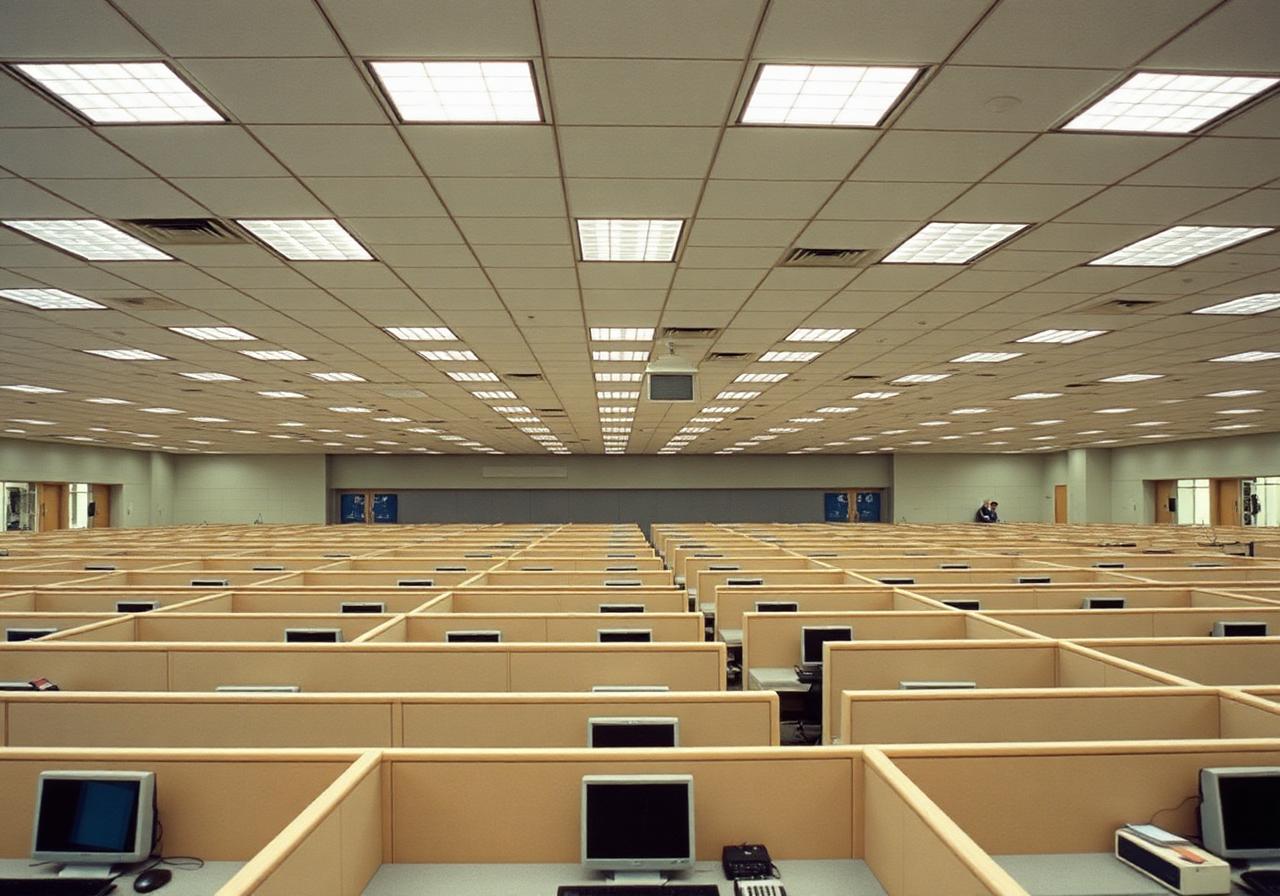
By the late 1990s, what survived in most offices was a stripped-down, cost-cut version of Propst's idea — the cubicle. He called the result 'monolithic insanity' in a 1997 interview, distancing himself from the system that had made his name.
From the archive
Belongs to the era of
1960s–1970s · Jet Age Modernism →Manufactured by
Herman Miller →More from the catalogue