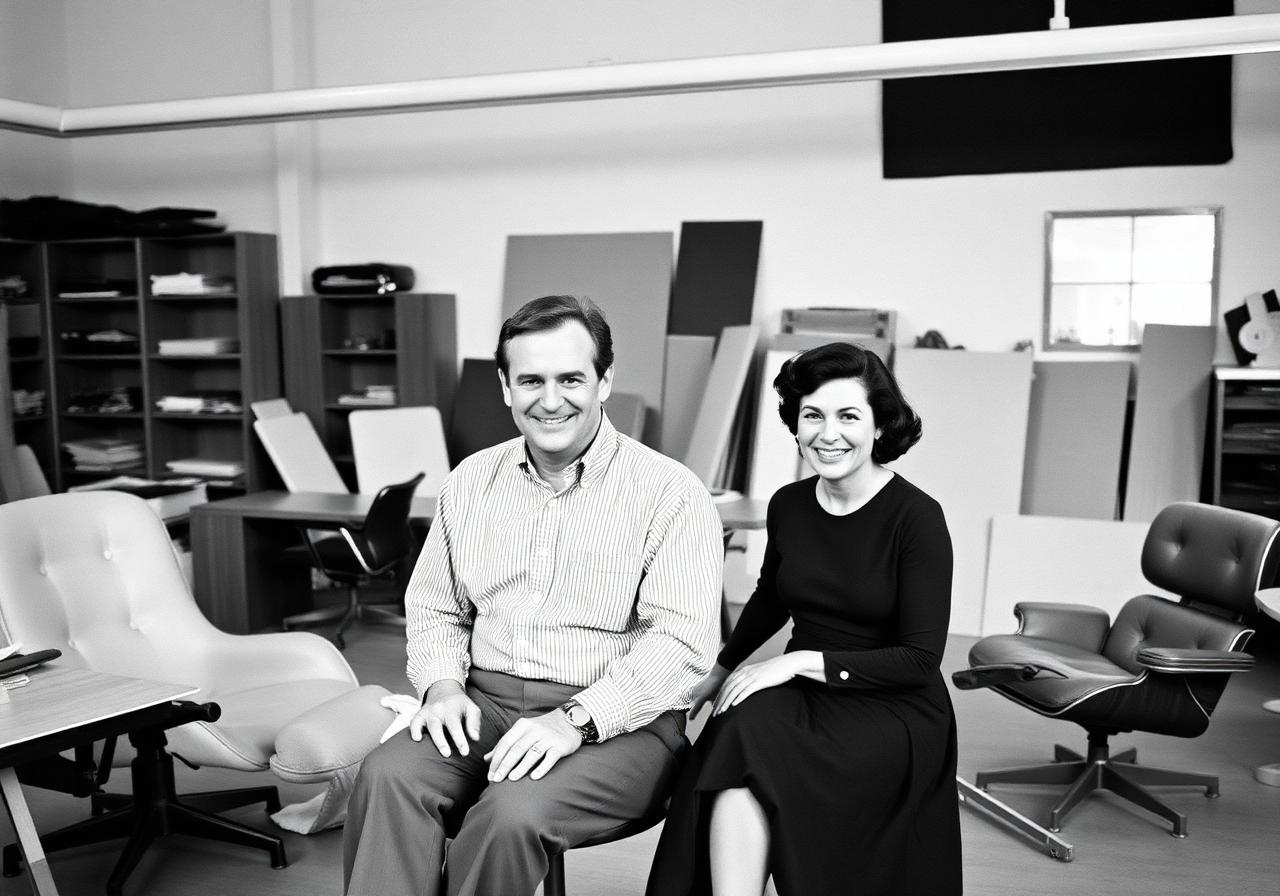
A husband-and-wife studio whose engineering of plywood, fiberglass, and aluminum produced the seating language of the modern executive.
Engineers who happened to design furniture
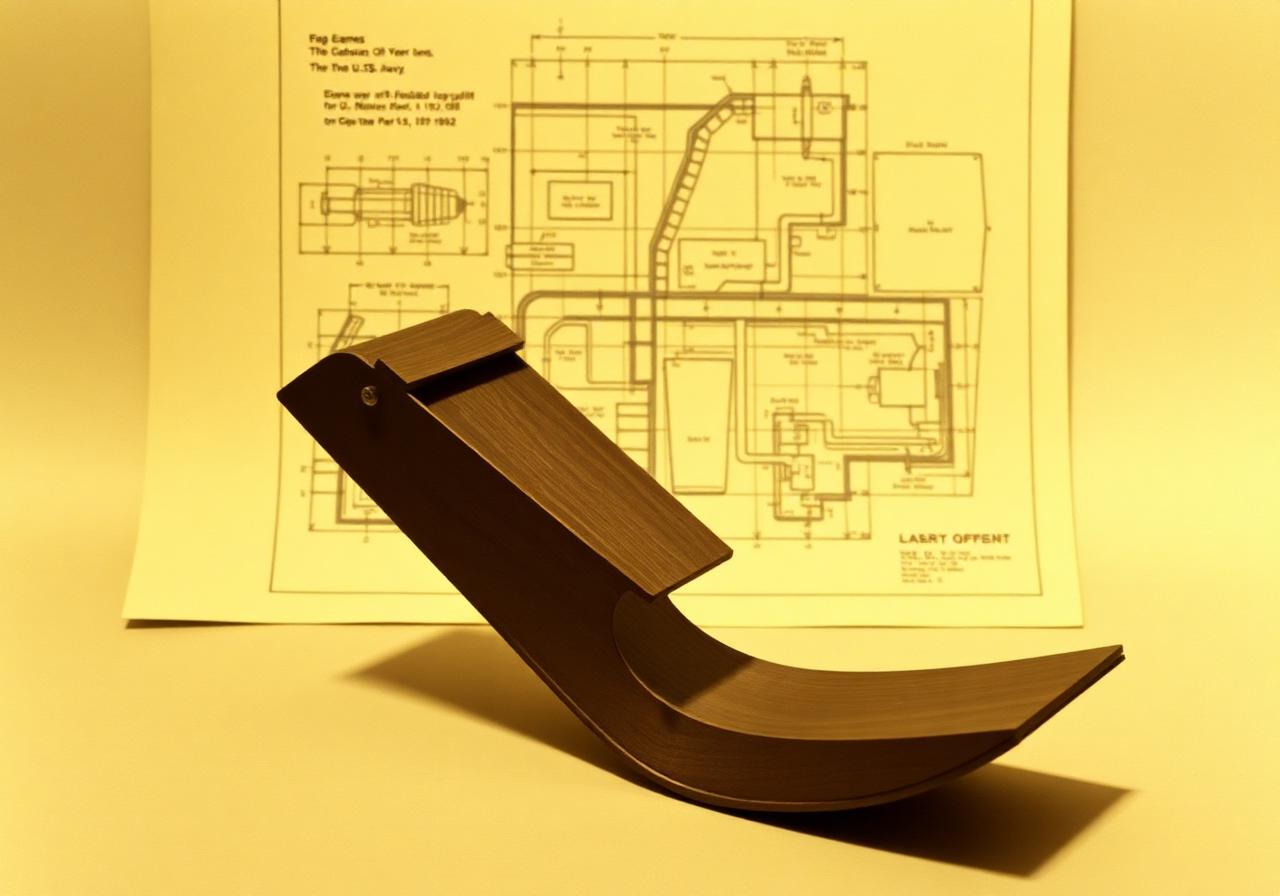
Charles trained as an architect at Washington University in St. Louis (and was thrown out before graduating, reportedly for being too modern); Ray studied painting under Hans Hofmann in New York. They met at Cranbrook in 1940 and married a year later. In their Venice, California studio at 901 Washington Boulevard, they treated furniture as an engineering problem — molding plywood under heat and pressure in a press they had built themselves (the 'Kazam! machine'), casting aluminum bases, and prototyping with the same rigor as the wartime leg splints that first funded the studio. The splints, commissioned by the US Navy in 1942, taught them how to compound-curve plywood without splintering — a process every chair they later designed would depend on.
The 670 lounge chair
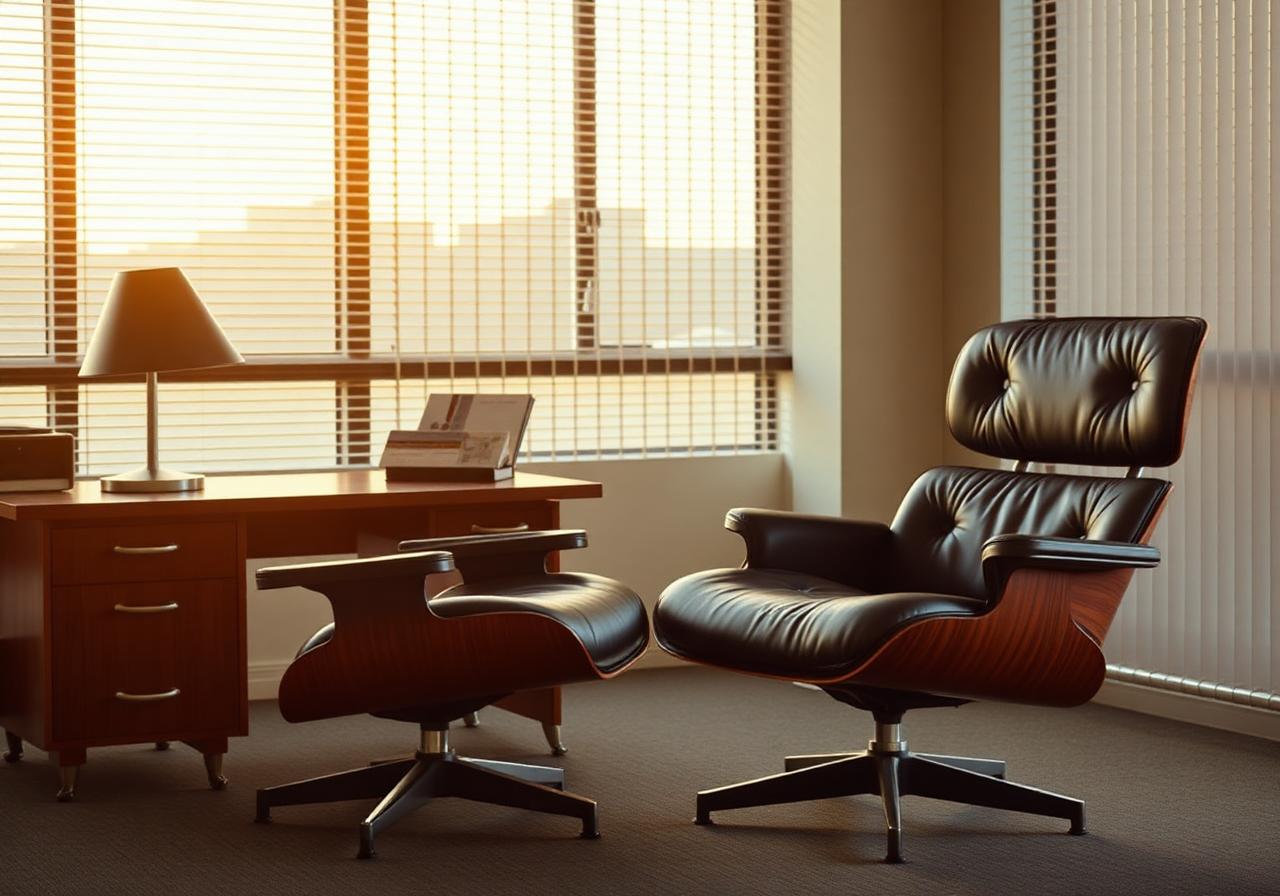
Released in 1956 by Herman Miller, the Eames Lounge Chair (model 670) was conceived as a personal gift for filmmaker Billy Wilder, who had asked Charles for 'something I can sleep in if the editing runs late.' The brief became the most quoted design objective of the century: Charles described the goal as the 'warm receptive look of a well-used first baseman's mitt.' The first prototype, in walnut and black leather, sat in Wilder's office at Paramount; Herman Miller put it into production within a year and it has never left the catalogue. The chair remains the most quoted office furniture object of the twentieth century — and, by some margin, the most counterfeited.
Adoption by aviation
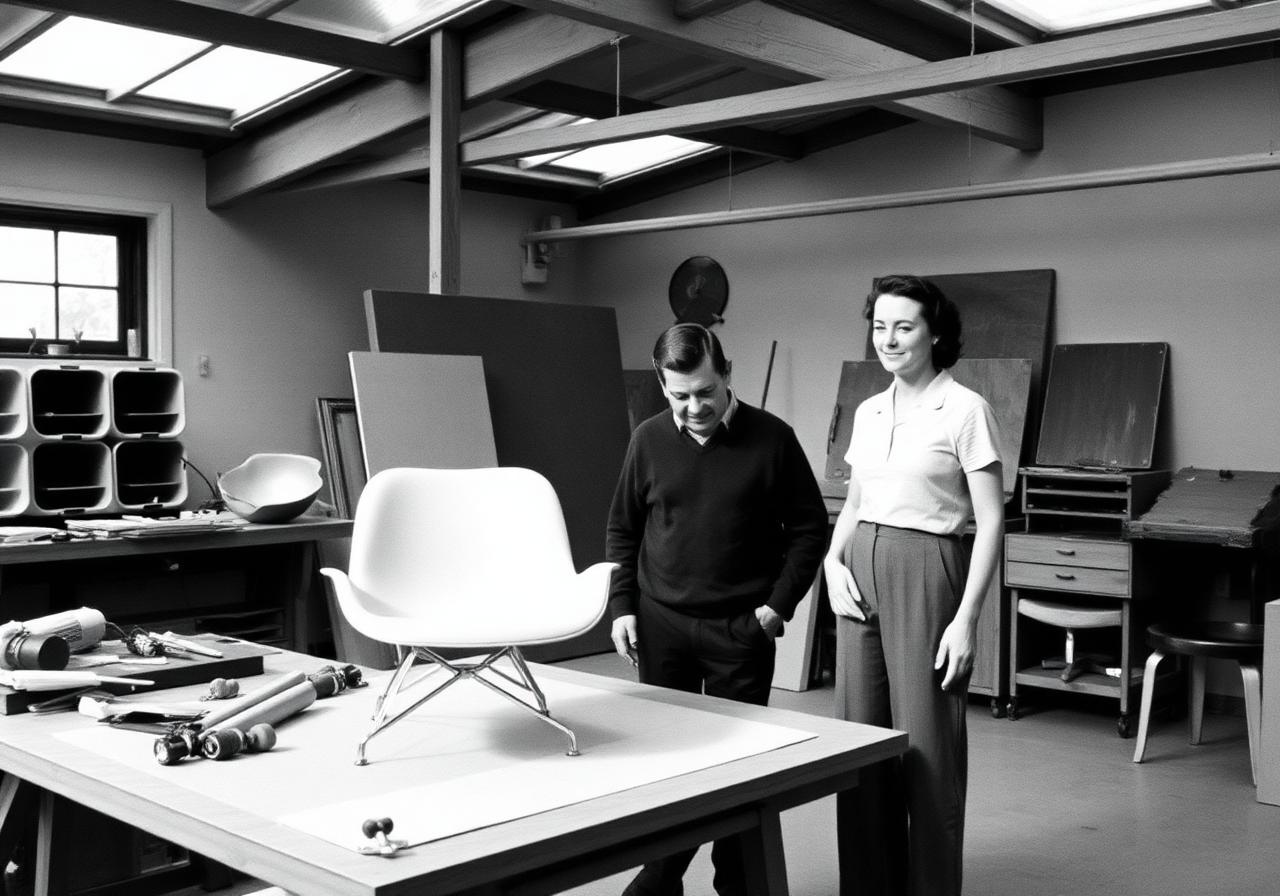
Boeing and Douglas executives kept 670s beside their desks for after-hours reading and off-the-record briefings; Eames Aluminum Group chairs (1958) lined their conference tables. The studio's belief that 'the details are not the details, they make the design' resonated with industries that built machines to the same standard, and the Eames pieces carried the same engineered aura as the aircraft those executives were selling. The Tandem Sling seating Charles designed for O'Hare and Dulles in 1962 — still in use, with replacement upholstery, in dozens of US airports — quietly extended the studio's grammar from the boardroom to the gate.
A studio, not a brand
Charles and Ray refused to separate their work into 'design,' 'film,' or 'exhibition.' Powers of Ten, the IBM pavilion at the 1964 World's Fair, the Tandem Sling, the seven-screen Glimpses of the USA shown to Khrushchev in Moscow in 1959 — it all came out of the same Venice studio, often the same week. They produced over 125 short films, designed major exhibitions for IBM and the Smithsonian, and held no junior designer to the credit of any single chair: every piece was attributed to 'the Office of Charles and Ray Eames.' When Charles died in 1978, Ray spent her remaining decade refusing licensing deals that would have diluted what they made together. She died on August 21, 1988 — exactly ten years to the day after him.
Pieces by this designer
Belongs to the era of
1960s–1970s · Jet Age Modernism →Manufactured by