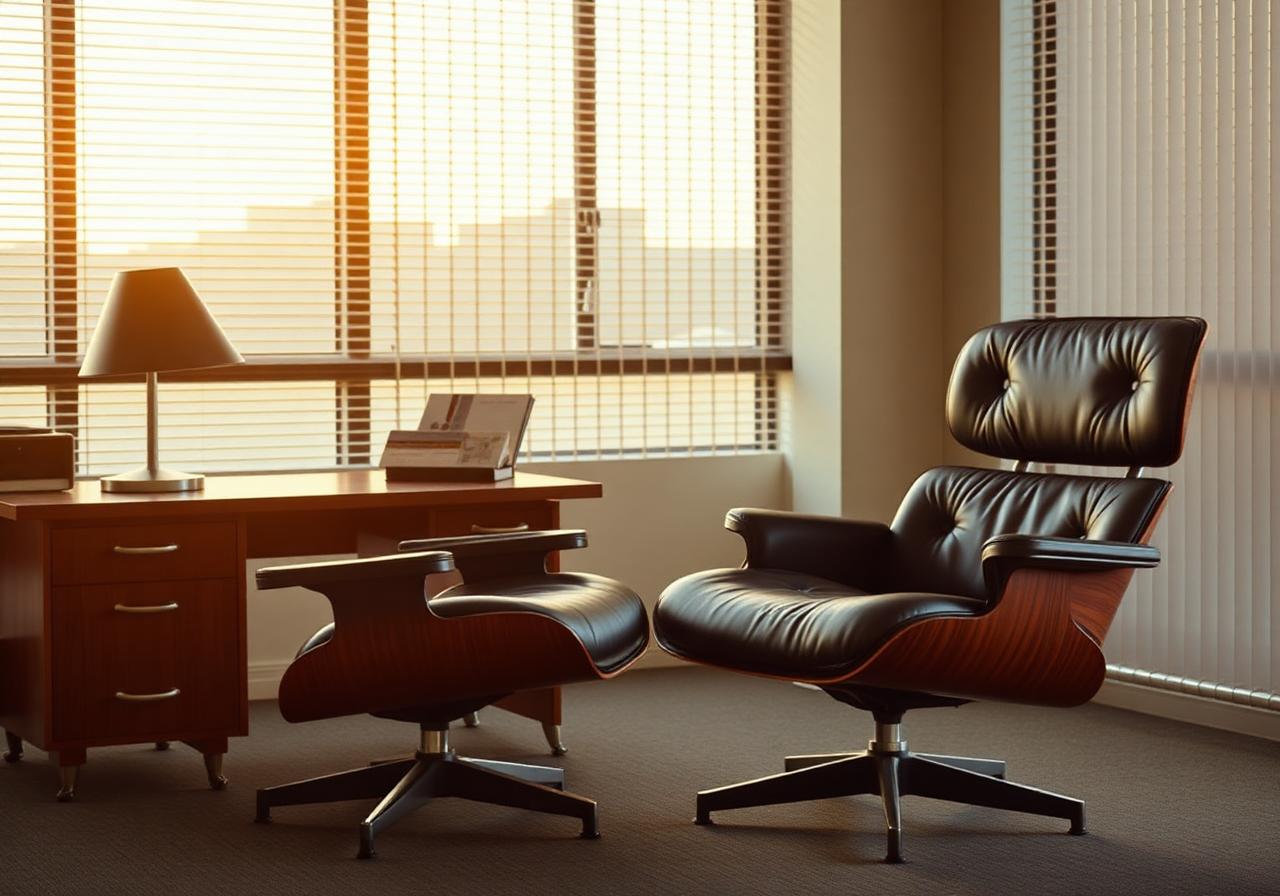
Molded rosewood plywood and down-filled leather — the chief pilot's reading chair, and later the CEO's.
Construction
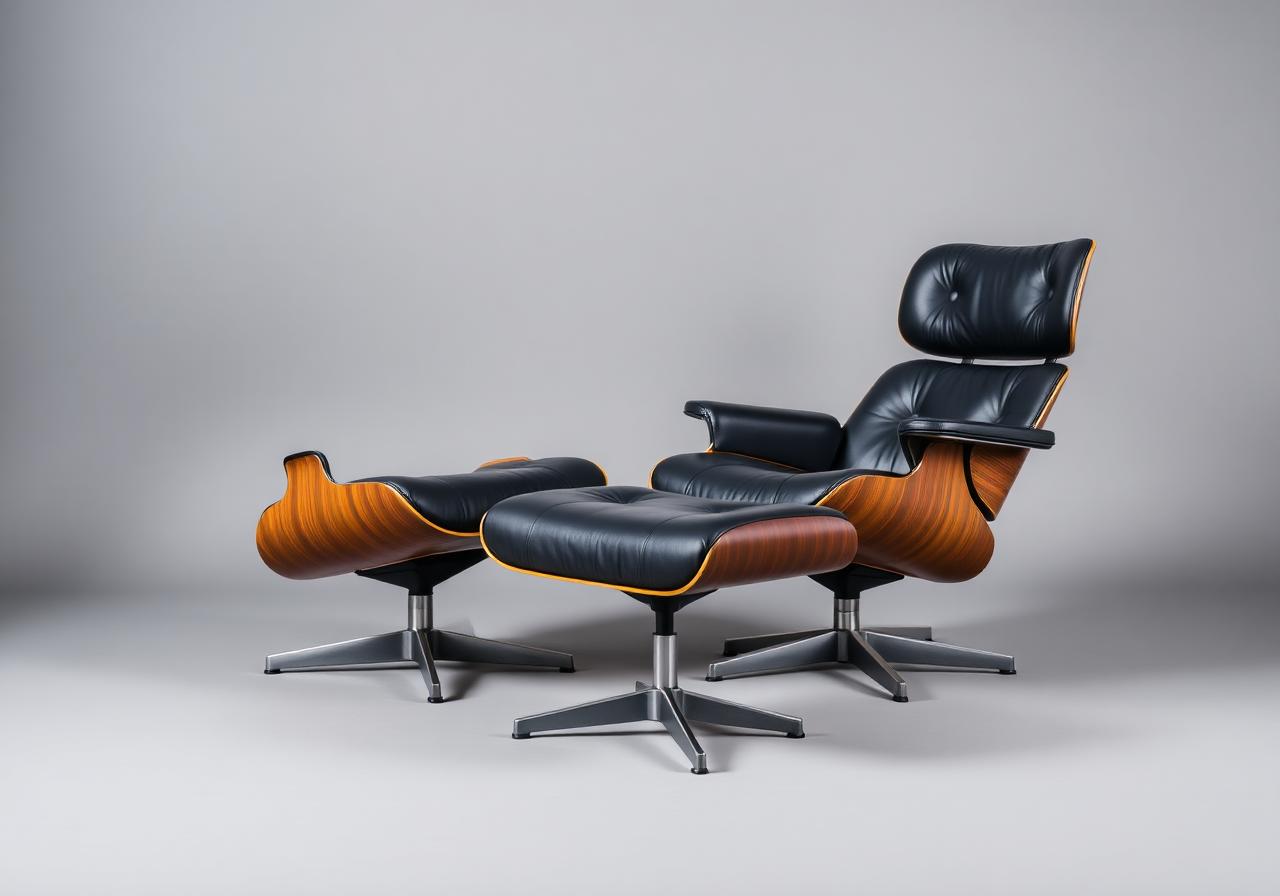
Three curved plywood shells veneered originally in Brazilian rosewood (later walnut after the 1992 CITES listing), suspended on a die-cast aluminum base, with leather cushions over latex foam and goose down. The shells are formed under heat and pressure in the same five-axis presses the Eames studio developed for wartime leg splints — the production line, in a real sense, never converted from military work.
The proportions
The 670 sits low — only 32 inches tall at the back — and reclines slightly. Charles described the goal as the 'warm receptive look of a well-used first baseman's mitt.' Every dimension was reverse-engineered from that sentence: the cushion depth chosen so the sitter sank rather than perched, the headrest angled for reading rather than dictation, the swivel light enough to turn with a bare foot.
In the executive office
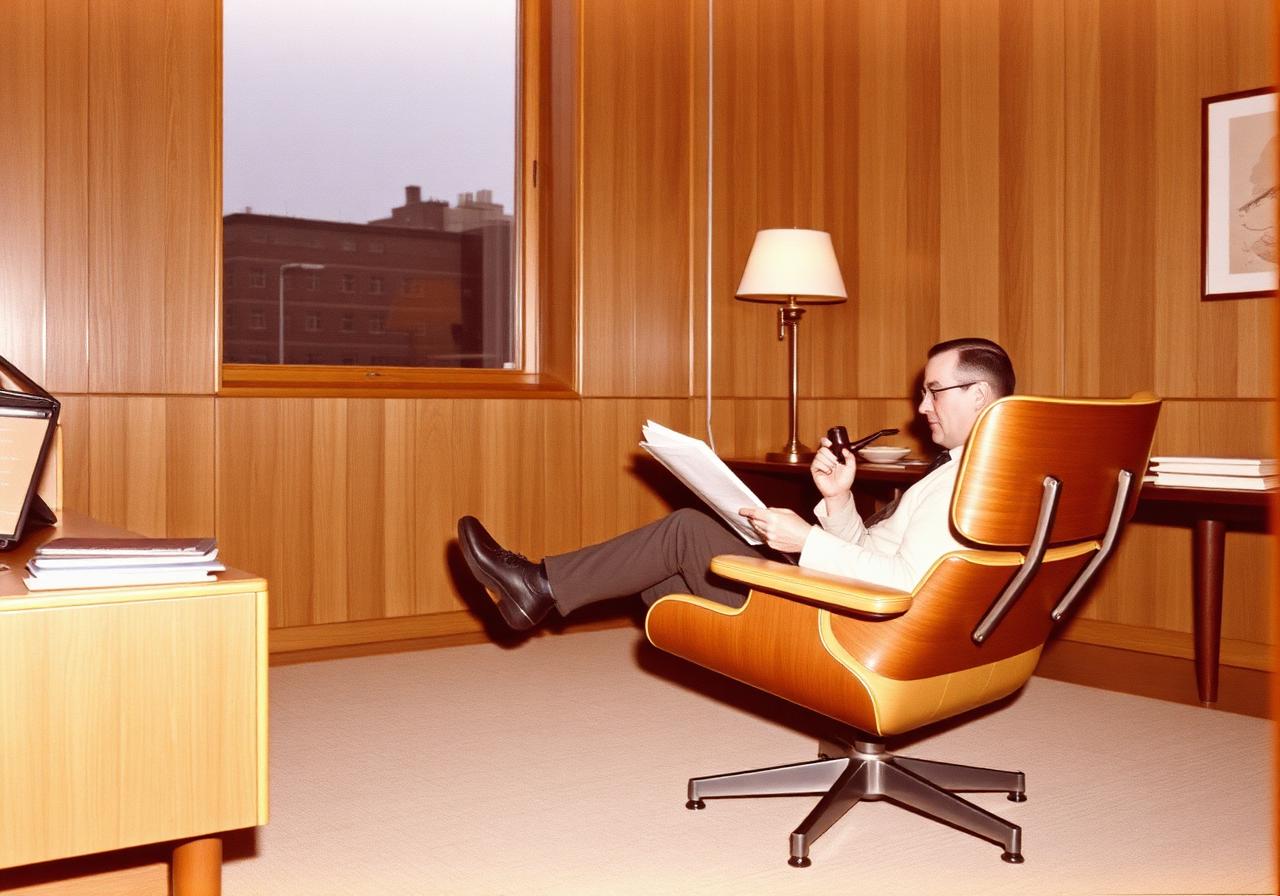
Boeing and Douglas executives kept 670s beside their desks for off-the-record briefings. The chair carried the same engineered aura as the aircraft they were selling — a closed loop of mid-century American confidence in aluminum, plywood, and the men who knew what to do with both.
The counterfeits
By the 1990s, the 670 was the most-knocked-off chair in the world. Italian, Chinese, and US replicas flooded the market at a third of the genuine price. Herman Miller fought a long, partly successful trade-dress campaign through the 2000s, but the design's uncopyrightable silhouette means most knockoffs still ship freely. A genuine chair carries an embossed medallion under the seat — and, increasingly, a holographic authentication chip.
A gift, not a brief
The 670 was conceived as a personal gift for filmmaker Billy Wilder. Herman Miller put it into production within a year, and it has never left the catalogue. The original gift chair, in walnut and black leather, is now in the collection of the Vitra Design Museum.
From the archive
Belongs to the era of
1960s–1970s · Jet Age Modernism →Manufactured by
Herman Miller →More from the catalogue