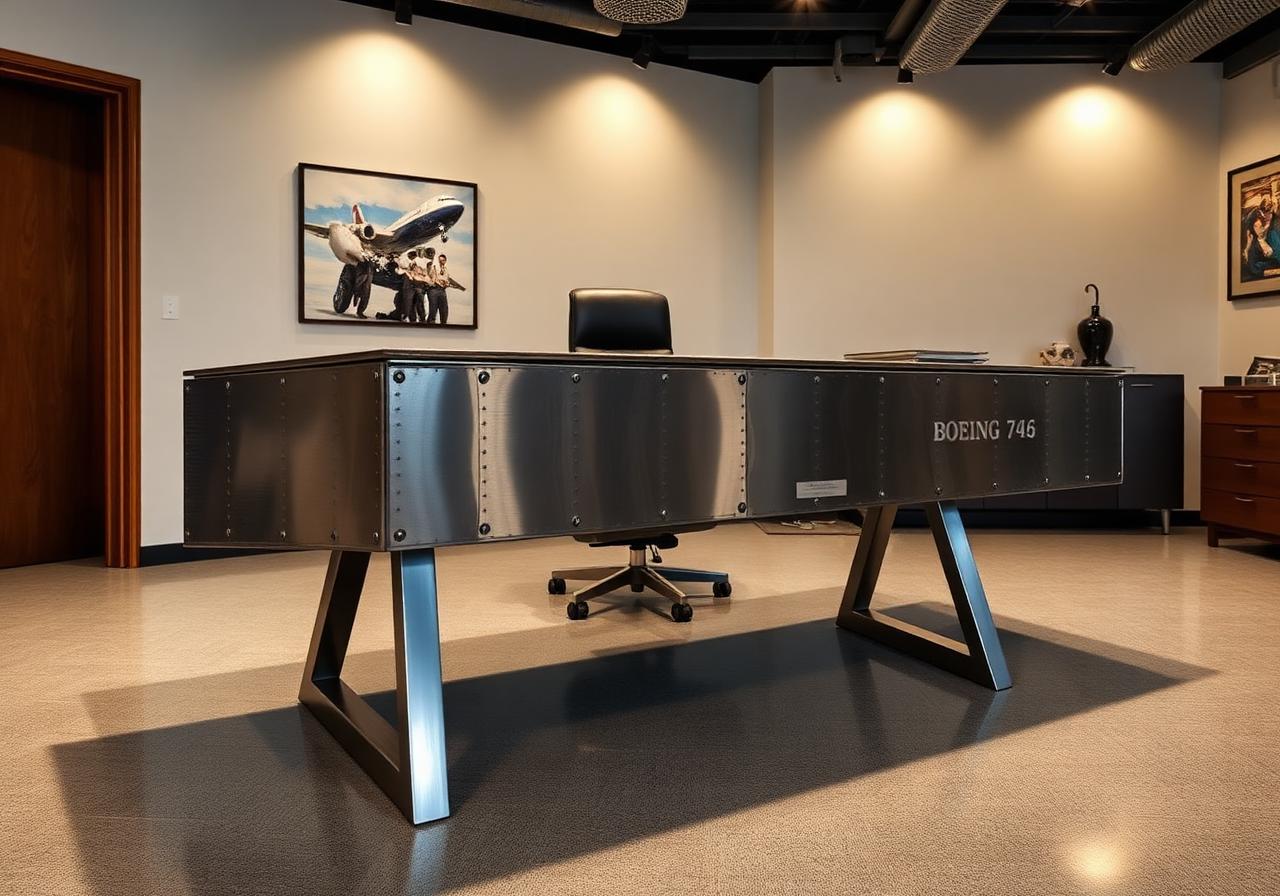
Decommissioned 747 fuselage panels, engine cowlings, and wing skins reborn as desks, tables, and shelving.
Provenance
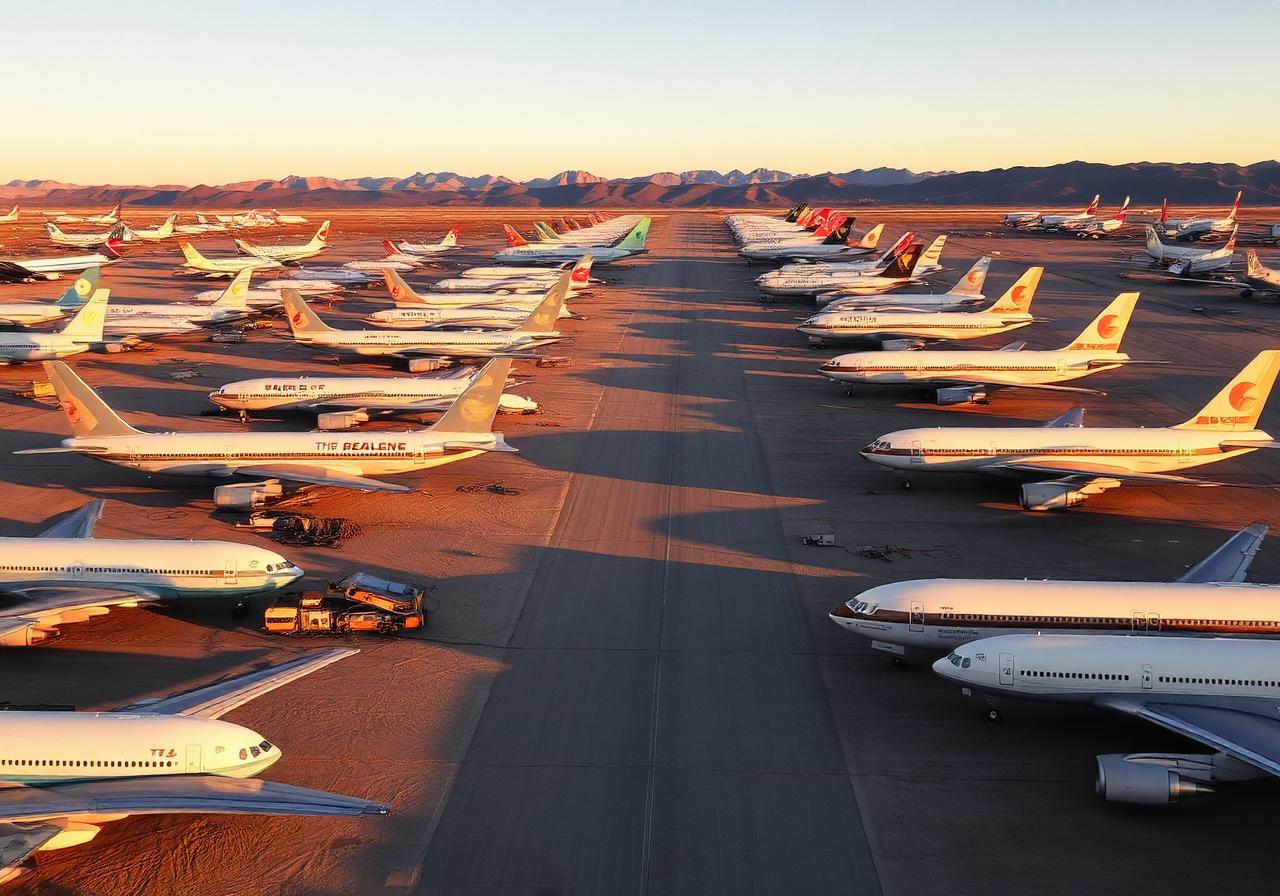
Most pieces are sourced from boneyards in Mojave, Tucson, and Victorville — the desert storage fields where retired widebodies are parted out by AAR, GA Telesis, and a handful of specialist brokers. Fabricators retain serial plates, registration numbers, and zone markings as part of the finish. The furniture keeps its tail number, and a buyer can typically trace a desk back to a specific airframe, route history, and final flight.
What gets used, what doesn't
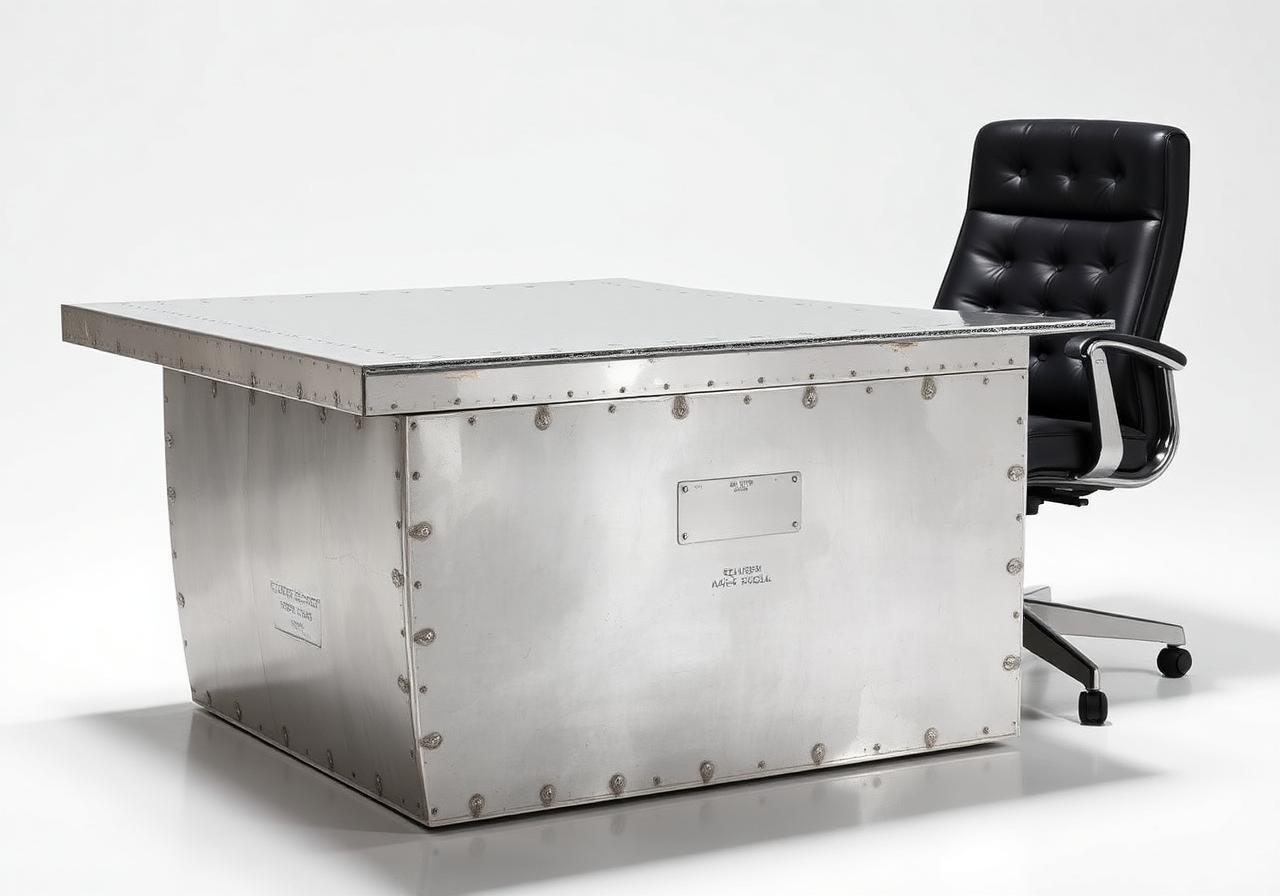
Fuselage skin (clad 2024-T3 aluminum, roughly 1.6mm thick) becomes desktops and shelving. Engine cowlings, with their compound curves, become bar fronts and reception desks. Window belts, with their punched openings, become room dividers and wine racks. Wing leading edges, which contain de-icing channels, are largely unusable — the internal geometry is too complex to repurpose, and most ends up melted down for ingot stock.
Where it lands
Airline lounges, MRO headquarters, and aviation museum executive offices favor these pieces for their literal storytelling. A desk made from a retired Pan Am 747 is a closing argument by itself. Lufthansa Technik's executive offices in Hamburg, Air New Zealand's Auckland HQ, and the Etihad Innovation Centre all furnish reception and boardroom spaces with traceable airframe components.
The provenance premium
A desk fabricated from a generic ex-cargo 747 fuselage panel might retail for $8,000–$15,000. The same desk made from an aircraft with a recognizable history — a former Air Force One support jet, a Concorde fairing, a 747 that operated the final Pan Am flight — can clear $80,000 at auction. The material cost is identical; the rest is documentation and storytelling, the same economics that govern a vintage Rolex with a verified original owner.
Sustainability as story
What started as a niche product for aviation enthusiasts has been quietly absorbed into ESG narratives. A boardroom table cut from a retired widebody is now both a brand artifact and a line item in the airline's sustainability report — circular economy as conference furniture.
From the archive
Belongs to the era of
1990s–Present · The Digital Cockpit →More from the catalogue